
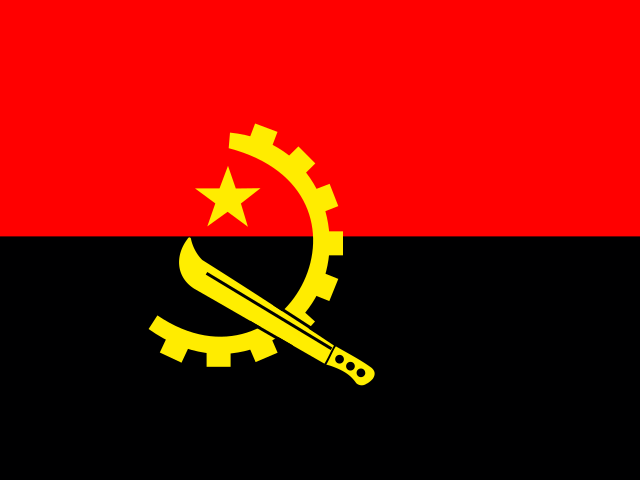
 Middle Africa
Angola has waterfalls, rivers, national parks, beaches and deserts. Its capital is Luanda. Tourism is still developing, and travel outside the capital can be difficult.
Why go
See Kalandula Waterfalls and the Pungo n'Dongo Black Stones in Malange.
Visit Mussulo for tropical beaches and water sports.
Explore the desert beaches of Baia Azul in Benguela.
See Serra de Leba and Tundavala Gorge in Huila.
Enjoy Angolan music, including Kuduro, Kizomba and Semba.
Getting there
By air
- Luanda's 4 de Fevereiro Airport is 4 km outside the city. It has public phones and banking facilities.
- TAAG Angola Airlines connects Luanda with destinations in Africa and São Paulo in Brazil.
- Other airlines listed serve Luanda from cities including Paris, Dubai, Addis Ababa, Frankfurt, Doha, Casablanca, Lisbon and Porto.
By land
- The road border near Oshikango in Namibia and Ondjiva in Angola is described as open 24 hours a day.
- Macon and Silas Ndapuka Transport run buses between Namibia and Angola. Macon uses the Santa-Clara border point.
- There are no buses from the Katwitwi border to Menongue. Shared bush taxis are an option.
By sea
- The source describes a small passenger ferry near Rundu in Namibia, based on information from 2003. It had officials from both countries at the crossing.
- Ferries between Cabinda and Luanda were reported in 2007 and could carry cars. Ask locally about departures.
Customs
- Travellers can take up to Kz50,000 in Angolan currency out of the country.
Getting around
Long-distance buses
Macon and Huambo Expresso are among the largest private bus companies. Bus routes connect most major cities, including coastal and inland destinations. Local minibus transport is described as unsafe.
Trains
Angola has three main railway lines. They do not connect with each other. The northern line links Luanda and Malanje, with daily departures and three seating classes. The middle line serves Lobito, Cubal and Huambo, with some trains continuing to Luau. The southern line links Namibe, Lubango and Menongue.
Domestic flights
TAAG Angola Airlines runs scheduled flights from Luanda to destinations around the country. Listed destinations include Cabinda, Huambo, Lubango, Menongue, Moçâmedes and Soyo.
Driving
Drive on the right. Main roads in Luanda and the provinces are described as being in relatively good condition. Rain can wash away roads and bridges from November to April. Outside Luanda, travel with someone who knows local conditions. Watch for landmines in rural areas. Petrol may be hard to find. Avoid driving after dark.
What to see and do
Kalandula Waterfalls and Pungo n'Dongo Black Stones
These are major natural sights in Malange.
Baia Azul
Visit for desert beaches in Benguela.
Benguela and Lobito
See Benguela's art deco buildings and Lobito's Restinga Peninsula.
Kwanza Sul
Sights include Cubal Canyon, Conde hot springs, Binga Waterfalls and the Waku Kungo plains.
Serra de Leba and Tundavala Gorge
Visit Huila for mountain and gorge scenery.
Arco Lagoon
Explore this Namibe sight alongside the region's beaches and desert.
Food and drink
Fish, cassava and spicy stews
These form the basis of many local dishes.
Fresh seafood
The coast offers abundant seafood, including lobster bought fresh from fishing boats.
Tropical fruit
Locally grown tropical fruit is praised for its rich flavour.
Ilha de Luanda beach restaurants
Choose from informal restaurants through to very exclusive places.
Bottled mineral water
Choose bottled water and do not drink tap water, including in restaurants.
Cuca beer
Cold draught Cuca beer is mentioned as a highlight in Lobito.
Money
Angolan kwanza, written Kz; currency code AOA.
- Most restaurants and small hotels accept cash and Angolan payment cards, but not foreign cards.
- Cash machines are common in cities, but queues can be long and machines often run out of cash.
- In 2024, usual withdrawal limits were Kz60,000 at BIC bank and Kz40,000 at BAI bank. These amounts can go quickly when paying for everything in cash.
- Plan ahead so you have enough cash.
Typical costs
- Restaurant meals are described as expensive, even in Luanda.
- The northern railway line lists a fare of around Kz2,500, without a date.
- Ilha de Luanda has beach restaurants ranging from informal places to very exclusive ones.
Language
- Portuguese is the official language and is understood by almost everyone. Angolans use European Portuguese.
- Umbundu, Kikongo and Kimbundu are also commonly spoken.
- English is not widely spoken. Strong Portuguese skills are important for independent travel and trips outside Luanda.
- Bom dia
- A simple greeting.
Staying safe
- Consider hiring a trusted local guide who knows the country well.
- Avoid travelling alone or after dark.
- Never go beyond red and white HALO Trust posts, which mark minefields. Stay away from areas marked with red stones or similar markers.
- Carry identification at all times. The source specifies a certified passport copy or a national identification card.
Local customs
Do
- Greet people promptly and respectfully when you meet them.
- Greet the oldest person first when visiting a home.
- Let older people enter buildings first and offer them your seat on public transport.
- Wait for the oldest person in the home to start eating.
- In rural areas, greet the local soba, a chief with government-backed authority.
- Understand that attention from local people may reflect curiosity rather than hostility.
Don't
- Do not interrupt someone who is speaking.
- Do not begin eating before the oldest person in the household.
Staying healthy
- Advanced medical care is very limited.
- Malaria is a major threat. The source strongly recommends medicine to prevent malaria.
- Use insect repellent regularly and sleep under a mosquito net if you have one.
- Drink bottled water. Do not drink tap water.
Where to stay
- Tropico Hotel
- Alvalade Hotel
- Le President Meridien Hotel
- Continental Hotel
Outdoor adventures in Angola
Angola has waterfalls, rainforest, desert landscapes and Atlantic beaches. Visitors can explore national parks, hike between coastal coves and visit caves, cliffs and hot springs. Tourism facilities are limited in some areas, and a trusted local guide can help with travel.
Kissama National Park
SafariGreater Luandanear Luanda
Visit from Luanda. Eco Tur Angola offers tailored tours with vehicles designed for wildlife viewing.
- Consider hiring a trusted, knowledgeable local guide.
Cangandala National Park
Wildlife
Consider arranging the visit with a trusted local guide. Transport and entry arrangements are not specified.
Kalandula Falls
More to doMalanjenear Malanje
The falls are near Malanje. Consider using a trusted local guide to arrange the visit.
Baia Azul
BeacheBenguelanear Benguela
Travel from Benguela by car or hired taxi.
Iona National Park
More to doSouthwest Angola
Consider arranging a visit with a trusted local guide. The park is accessible, but transport details are not specified.
- Infrastructure is limited.
Mussulo Island
BeacheGreater Luandanear Luanda
Visit from Luanda. The island lies south of the city; transport arrangements are not specified.
Great Escarpment
Hike
Explore hiking opportunities with a trusted local guide. Scenic drives require a four-wheel-drive vehicle.
- The mountains are very steep.
- Use a four-wheel-drive vehicle for scenic drives.
Tundavala Gap
More to doHuílanear Lubango
Visit the cliff viewpoint 20 km northwest of Lubango. Another viewpoint, overlooking Tundavala waterfall beside a dam, is 5 km before it.
- The main viewpoint is at an impressive cliff.
Pungo Andongo Black Rocks
More to doMalanjenear Malanje
Visit from Luanda or Malanje. Access is described as reasonably easy, but transport details are not given.
Floresta do Maiombe
WildlifeCabinda Province
Consider arranging a reserve visit with a trusted local guide in Cabinda. Access details are not specified.
- Cabinda receives rain through much of the year.
Sassa Caves
Cavenear Sumbe
The caves are near Sumbe, about four hours south of Luanda. Consider using a trusted local guide; cave-entry arrangements are not specified.
Caotinha Beach Inlets
HikeBenguelanear Benguela
Reach the beaches south of Benguela by car or hired taxi, then hike from one inlet to the next.
Praia Morena
BeacheBenguelanear Benguela
Visit near the centre of Benguela. The beach lies between the road and the ocean.
Restinga Peninsula
More to doBenguelanear Lobito
Visit the peninsula in Lobito. Local access details are not specified.
Cubal Canyon
More to doKwanza Sul
The canyon is in Kwanza Sul. Consider arranging a visit with a trusted local guide; no route is specified.
Conde Hot Springs
Hot springKwanza Sul
The springs are in Kwanza Sul. Consider using a trusted local guide to arrange the visit.
Cachoeiras
More to doKwanza Sul
Visit in Kwanza Sul with help from a trusted local guide. Access details are not specified.
Binga Waterfalls
More to doKwanza Sul
The waterfalls are in Kwanza Sul. Consider arranging the visit with a trusted local guide.
Arco Lagoon
More to doNamibe
Visit in the Namibe area. Consider using a trusted local guide; transport details are not specified.
Alto Hama Hot Springs
Hot springHuambo
The springs are in the Huambo area. Consider arranging a visit with a trusted local guide.
Ruacana Falls
More to doCunene
Visit in Cunene. Consider arranging transport and a visit with a trusted local guide.
Serra de Leba
More to doHuíla
Visit in Huíla. Consider using a trusted local guide; no specific route is given.
Waku Kungo Plains
More to doKwanza Sul
Visit in Kwanza Sul. Consider arranging a scenic visit with a trusted local guide.
Namibe Beaches and Desert
More to doNamibe
Explore the Namibe area with help from a trusted local guide. Specific beach access and desert routes are not given.
Airports, metros and trains in Angola
Airports with scheduled flights
- NBJDr. Antonio Agostinho Neto International AirportLuanda (Ícolo e Bengo)Main international airport
Trains
- Rail network
- 2,761 km
People and safety in Angola
Religion
Most people are Christian. Mostly one faith.
- Christian93%
- No religion5%
- Folk religions4%
- Muslim1%
LGBT+ travellers
Legal
- Same-sex marriage is not recognised.
- Legal gender change is recognised.
- Laws protect against discrimination.
Women travellers
Ranked #133 of 181 countries for women's safety, inclusion and justice.
58% of women say they feel safe walking alone at night where they live.
Who can visit without a visa
Travellers from 99 of 198 countries can visit Angola easily: no visa, a visa at the airport, or a short online form.
- Visa not required99
- eVisa56
- Visa required43
Who can visit easily, by part of the world
For each part of the world: how many countries' travellers can come easily. Easy means no visa, a visa at the airport, or a short online form.
- Oceania13 of 14 countries
- Europe32 of 46 countries
- Americas22 of 35 countries
- Africa17 of 53 countries
- Asia15 of 50 countries
Questions
Will I be able to get by with English?
English is not widely spoken. Portuguese is important, especially outside Luanda or when travelling independently.
What weather should I expect?
The north and interior highlands have a cool, dry season from May to October and a rainy season from November to April. April brings the heaviest rain and violent storms.
Can I use a foreign bank card?
Most restaurants and small hotels do not accept foreign payment cards. Carry enough cash, as cash machines can have long queues or run out of money.
How can I leave the airport in Luanda?
Afritaxi runs clearly marked white taxis during daylight hours. Eco Tur offers airport transfers that you must book in advance.
Is driving outside Luanda straightforward?
Conditions can be difficult, and rain can wash away roads and bridges. Travel with someone who knows local conditions and avoid driving after dark.
Can I drink the tap water?
No. Use bottled water, including when eating in restaurants.
What food can I try?
Local cooking includes fish, cassava products and spicy stews. The coast is known for fresh seafood, and tropical fruit is also praised.
Do I need to carry identification?
Yes, identification is mandatory at all times. Carry a certified copy of your passport or your national identification card.
Will phone calls work reliably?
Mobile and landline networks can be overloaded, while international lines are often better. The country calling code is +244.
How should I behave when invited to someone's home?
Greet the oldest person first and wait for them to start eating. Listen carefully and do not interrupt.
 Reviewed by @snuck