
Western Asia
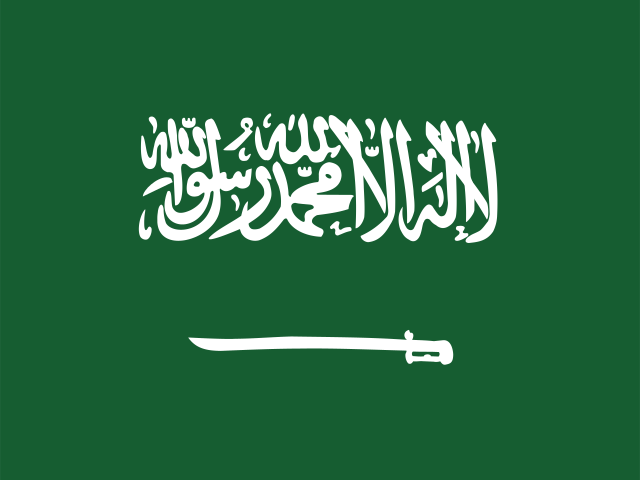 Western Asia
Saudi ArabiaTravel guide
- Riyadh
- Abha
- Dhahran
- Jeddah
- Jubail
- Mecca
Saudi Arabia covers much of the Arabian Peninsula. It has vast deserts, traditional markets, modern shopping malls and Islam’s holiest cities, Mecca and Medina. Visitors must accept strict limits on behaviour and expression. The source warns of missile, drone and terrorist attacks, including attacks on airports.
Why go
Traditional souq markets and modern shopping malls.
Desert landscapes and ancient ruins.
Mecca and Medina, Islam’s holiest cities, with religious access restrictions.
Cooler mountain areas around Ta’if.
Best time to go: Winter is cooler than the very hot May–September period. Nights can fall below freezing, and rain is possible.
Getting there
By air
- The four main international airports are at Riyadh, Jeddah, Medina and Dammam. There are also some direct flights to Neom and the Red Sea Project.
- Saudia, Flyadeal and Flynas serve the country. Many Gulf and major European airlines also fly there.
- For the Eastern Region, another option is flying to Bahrain and crossing into Saudi Arabia by car.
By land
- SAT, Sapto Alsa for Transportation, runs cross-border buses to most neighbouring countries and beyond, including Cairo.
- Road crossings exist on nearly all borders. Crossings with Bahrain, Qatar and the United Arab Emirates are heavily used.
- There are no international passenger railway connections. Saudi Arabia Railway runs domestic trains between Riyadh and Qurayyat, near the Jordanian border.
By sea
- Passenger ferries run daily from Port Safaga in Egypt.
- The source says ferries from Sudan and Eritrea appeared to have stopped by June 2025.
Customs
- Do not bring alcohol, pork products, non-Islamic religious materials or pornography. These can be confiscated, and you may be fined or jailed.
- Drug trafficking carries the death penalty. Do not carry other people’s bags or let strangers put anything in your pockets.
- Check the rules before bringing prescription medicines.
Getting around
Domestic flights
Flying is a main way to cover long distances. Saudia has frequent flights on busy routes. The Riyadh–Jeddah flight takes about 90 minutes. The source lists a walk-up one-way fare of SR280. Flynas and Flyadeal can cost less when booked ahead. Flights are less frequent, changes cost extra and meals are not included.
Long-distance buses
The Saudi Arabian Public Transport Company, SAPTCO, links much of the country. Buses are comfortable and air-conditioned but can be slow. Bus stations are often several kilometres outside city centres. The source lists Riyadh–Dammam at about six hours and SR60. Premium services on Riyadh–Dammam and Riyadh–Bahrain cost about 50% more. They offer direct city-centre journeys, larger seats and a meal, but departures are limited.
Trains and metro
Train routes link Riyadh with Dammam and with Al Qurayyat. The Haramain high-speed railway links Mecca and Medina through Jeddah and King Abdullah Economic City. Buy tickets ahead because trains often sell out. Online tickets and a waiting-list option are available. Trains offer economy and business classes, with power sockets in both. Private sleeper cabins are available on north–south services. Check what your fare includes. Business class and private cabins do not always include meals or lounge access. Cheap fares can have high change and cancellation charges. Only the most expensive business fare offers free changes. Do not depend on train wireless internet. The source reports that it did not work on the Riyadh–Dammam route, although mobile data was mostly available. Mecca and Riyadh have metro systems.
Driving
Drive on the right. Rental cars are available to people aged 21 and over. Roads between major cities are generally excellent, but other roads vary. Some highways have poor lane markings. Daytime driving is recommended because some major highways have no streetlights. Use navigation, as some signs are only in Arabic. Drivers may change lanes without signalling. The country has a high road accident rate. Fuel stations are roughly every 30 kilometres, and petrol is inexpensive. After an accident, everyone must stay at the scene and call Traffic Police on 993. The wait can be up to four hours. Try to arrange a translator because police may not speak English. You need an official accident report before insured body repairs can proceed.
What to see and do
Mecca
One of Islam’s holiest cities and a major pilgrimage destination. The surrounding area is closed to non-Muslims.
Medina
A major Islamic holy city with the Prophet’s Mosque. Non-Muslims may view it from outside the perimeter fence outside the Hajj season.
Desert landscapes and ancient ruins
The country has extensive deserts, ancient ruins and natural landscapes to explore.
Ta’if
This mountain resort city has cooler summer temperatures than much of the country.
Browse traditional markets
Souqs offer a traditional market experience.
Visit shopping malls
Modern shopping malls are a prominent part of the country’s visitor experience.
Food and drink
Eating by hand
Food is traditionally eaten by hand. Use only your right hand.
Restaurants during prayer
Most restaurants let seated customers continue eating behind closed doors during prayer. New customers generally must wait until prayer ends.
Hotel dining
Some larger hotels have restaurants that stay open through prayer hours. They may also offer daytime room service during Ramadan.
Alcohol
Alcohol is banned. Do not bring alcoholic drinks into the country.
Money
Saudi riyal (SAR), also written SR; 100 halalas equal one riyal.
- The riyal is fixed at SR3.75 to one US dollar.
- Carry cash for smaller purchases. Larger businesses accept cards, but some smaller businesses refuse cards for small amounts.
- Cash machines are widespread, but some smaller banks do not accept foreign cards. The source suggests Samba, SABB and ANB.
- Money changers can be found in traditional markets but are uncommon elsewhere. Shops generally do not accept foreign currencies.
Tipping: Tipping is generally not expected, though staff appreciate it. Expensive restaurants often add a 10% service charge; ask whether staff receive it if you want to tip them.
Typical costs
- The source estimates daily travel budgets of US$50 for budget travel, US$100 for midrange travel and US$200 for higher-spending travel.
- A good hotel in a major city can cost more than US$200 per weekday night.
- The source lists a Riyadh–Jeddah walk-up one-way flight at SR280.
- The source lists a Riyadh–Dammam bus journey at SR60.
- Train lounge access costs SR30 online or SR50 at the station.
Language
- Arabic is the official language. Modern Standard Arabic is taught in schools.
- Najdi Arabic is spoken mainly in central and northern areas.
- Hejazi Arabic is spoken in the west, and Gulf Arabic in the east.
- Many Saudis in cities speak or understand English. Many road signs use both Arabic and English.
- Common migrant languages include Urdu, Bengali, Hindi, Tagalog, Malayalam and Indonesian.
Staying safe
- The source reports government warnings against travel because of missile and drone attacks, including attacks on airports. Check government travel advice and your airline before travelling.
- Particularly avoid the Yemeni border and the Asir, Jazan and Najran provinces. The source also reports some government warnings against travel to Riyadh’s King Khalid International Airport.
- Missile, rocket and terrorist attacks can occur anywhere. Follow local authority instructions and shelter indoors when told.
- Regional conflict has disrupted flights and closed airports and airspace. The source advises avoiding travel to or through the region where possible.
Local customs
Do
- Respect local customs and strict limits on behaviour and expression.
- Ask if you are unsure about a custom. People are generally willing to explain.
- Use your right hand when eating by hand.
- Observe restrictions at holy sites and family areas.
Don't
- Do not criticise or insult Islam, the royal family, government, Saudi citizens or the country.
- Do not enter Mecca’s restricted area if you are not Muslim.
- Do not enter the Prophet’s Mosque compound in Medina if you are not Muslim.
- Do not assume public behaviour accepted at home is legal here. The source lists indecent clothing and mixing between unrelated men and women as offences.
- Do not play music in public; the source lists this as banned.
Staying healthy
- Water is generally drinkable. Food is usually hygienic, but not always.
- Much of the country is extremely hot from May to September. Temperatures regularly exceed 50°C in the shade, while coastal humidity can be very high.
- The source says no vaccinations are required for general travel. Hajj pilgrims have separate vaccination requirements.
- For Hajj, the source requires a four-strain meningitis vaccine at least ten days before arrival. It also lists COVID-19 vaccination and, for arrivals from affected regions, polio or yellow fever vaccination.
Phone and internet
- Do not rely on wireless internet aboard trains. The source reports that it did not work on the Riyadh–Dammam service.
- Mobile data was mostly available along the Riyadh–Dammam railway.
Where to stay
- Hotels of many types are available across the country.
- Short-term furnished apartments, called shigka-maafroosha, are available in cities such as Mecca, Medina, Ta’if and Al Abha. They can be spacious and affordable.
- Prices at furnished apartments and smaller hotels are often negotiable. Smaller hotels normally require cash in advance.
- Major cities have many larger, more expensive hotels. A good hotel can cost more than US$200 per weekday night.
Outdoor adventures in Saudi Arabia
Saudi Arabia offers Red Sea diving, protected coral islands and mountain walks near Abha. Jeddah is a base for diving, including the Chicken Wreck. Serious regional security risks affect travel, with particular warnings for the Yemen border and the Asir, Jazan and Najran provinces.
Jeddah Red Sea reef diving
Scuba divingRed Sea coastnear Jeddah
Arrange a dive with a Jeddah dive operator. Many of the better sites are about one hour offshore by speedboat.
- Winter water temperatures can fall to 22°C. Use a 5 mm wetsuit with a hood.
Chicken Wreck
Scuba divingRed Sea coastnear Jeddah
Ask a Jeddah dive operator about visiting the Chicken Wreck.
- The wreck lies at depths of 10–18 m.
- Winter diving calls for a 5 mm wetsuit with a hood.
Farasan Islands
BeacheRed Sea coastnear Jizan
The island group lies about 40–50 km from Jizan.
- Travel warnings advise avoiding Jazan province because of attacks from Yemen.
Umm Al-Qamari Islands birdwatching
WildlifeRed Sea coastnear Al Qunfudhah
The islands lie southwest of Al Qunfudhah.
Jabal Sawda
HikeAsirnear Abha
Visit from Abha to climb Jabal Sawda.
- Travel warnings advise avoiding Asir province because of attacks from Yemen.
Airports, metros and trains in Saudi Arabia
Airports with scheduled flights
- AHBAbha International AirportAbhaMain international airport
- HOFAl-Ahsa International AirportHofufMain international airport
- AJFAl-Jawf International AirportAl-JawfMain international airport
- ULHAl-Ula International AirportAl-UlaMain international airport
- HASHail International AirportHailMain international airport
- JEDKing Abdulaziz International AirportJeddahMain international airport
Metro and subway
- MeccaMecca Metro9 stations18.1 kmsince 2010
- RiyadhRiyadh Metro85 stations176 kmsince 2024
Trains
- Rail network
- 5,590 km
- Electrified
- 453 km
- High-speed lines
- 450 km
- Top speed
- 300 km/h
People and safety in Saudi Arabia
Religion
Most people are Muslim. Mostly one faith.
- Muslim93%
- Christian4%
- Hindu1%
- No religion<1%
LGBT+ travellers
Illegal, with the death penalty in law
- The law allows death penalty.
- Legal gender change is not recognised.
Check your own government's travel advice before you go, and be careful with public displays of affection and dating apps.
Women travellers
Ranked #63 of 181 countries for women's safety, inclusion and justice.
87% of women say they feel safe walking alone at night where they live.
Who can visit without a visa
Travellers from 74 of 198 countries can visit Saudi Arabia easily: no visa, a visa at the airport, or a short online form.
- Visa not required5
- Freedom of movement2
- Visa on arrival66
- eTA required1
- eVisa5
- Visa required118
- Admission restricted1
Who can visit easily, by part of the world
For each part of the world: how many countries' travellers can come easily. Easy means no visa, a visa at the airport, or a short online form.
- Europe42 of 46 countries
- Asia23 of 49 countries
- Americas5 of 35 countries
- Oceania2 of 14 countries
- Africa2 of 54 countries
Questions
Is Saudi Arabia safe for a first visit?
Ordinary crime is low, but the source warns of missile, drone and terrorist attacks and major travel disruption. Check government advice and your airline before travelling.
When is the weather most comfortable?
Winter is cooler than the extremely hot May–September period. Winter nights can fall below freezing, and rain is possible.
Can I use English?
Many people in cities understand or speak English, and many road signs are bilingual. Some road signs are only in Arabic, and traffic police may not speak English.
Should I carry cash?
Yes. Larger businesses accept cards, but some small purchases require cash, and smaller hotels normally ask for cash in advance.
How can I travel between cities?
Domestic flights, long-distance buses and trains are available. Trains often sell out, so buy tickets ahead.
Can non-Muslims visit Mecca and Medina?
Non-Muslims cannot enter the area around Mecca. Outside the Hajj season, they may visit central Medina up to the Prophet’s Mosque perimeter fence, but cannot enter the compound.
Can I drink alcohol?
No. Alcohol is banned, and bringing it into the country can lead to confiscation, fines or jail.
What accommodation is available?
Options include hotels, short-term furnished apartments and luxury resorts. Small hotel and apartment prices are often negotiable.
What happens at restaurants during prayer?
Most restaurants let seated customers keep eating behind closed doors. New customers generally cannot enter until prayer ends.
What should I do after a road accident?
Stay at the scene and call Traffic Police on 993. You need an official accident report before insured body repairs can proceed.
 Reviewed by @snuck