
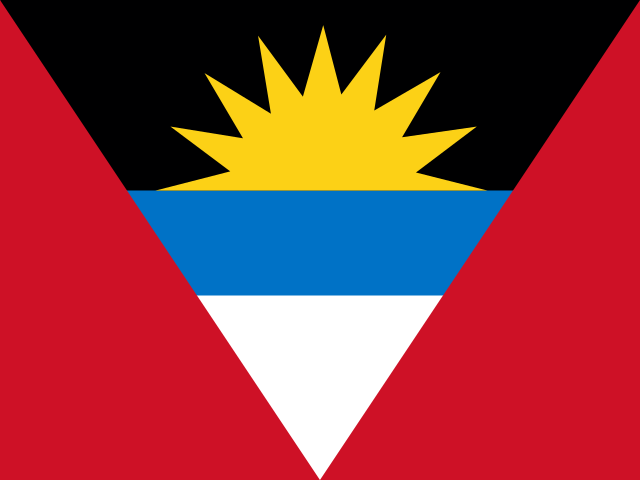
 Caribbean
Antigua and Barbuda is a country made up of two Caribbean islands, east-southeast of Puerto Rico. It is known for white sand beaches. Antigua has many resorts, while Barbuda has fewer tourist facilities. The capital is St. John's.
Why go
White sand beaches, from quiet spots to beaches with bars and water sports.
Nelson's Dockyard in English Harbour, a World Heritage Site.
Frigate birds on Barbuda.
British forts and views from Monk's Hill.
Getting there
By air
- V.C. Bird International Airport, with airport code ANU, is the main international airport. It is in northeastern Antigua, on the outskirts of St. John's.
- Flights arrive from the United States, Canada and the United Kingdom.
- Flights also connect Antigua with other Caribbean islands.
By sea
- Montserrat Ferry runs ferries from Montserrat.
- Jeans for Freedom offers occasional trips from Guadeloupe called discovery days.
Getting around
Local buses
Local buses are usually minibuses with about 12–14 seats. Look for the route number in a circular badge at the upper right of the windscreen. Wait at a stop or wave down a passing bus along the road. Buses can stop where you want along their route. Buses cost much less than private taxis, but routes mainly cover the main roads. There is no fixed timetable, though a bus usually passes every 10–15 minutes. Drivers can be fast.
Rental cars
Car rental is a common way for tourists to get around. Rental rates can become more reasonable for stays of a week or longer. Drive on the left and park in a well-lit area.
Tour operators
Tour operators are another common way for visitors to get around.
What to see and do
Nelson's Dockyard
This dockyard in English Harbour is Antigua's only World Heritage Site.
Monk's Hill
See British forts and views over Falmouth.
Frigate birds on Barbuda
Visit Barbuda to see frigate birds.
Boggy Peak
This is the country's highest point and a national park.
Shirley Heights lookout
Visit this lookout.
Devil's Bridge National Park
Explore one of the country's national parks.
Food and drink
Fungie and pepper pot
The national dish. Fungie, pronounced foon-gee, is made mainly from cornmeal and is similar to polenta.
Other local dishes
Try ducana, seasoned rice, saltfish or lobster from Barbuda.
Local sweets
Options include sugarcake, fudge, raspberry and tamarind stew, and peanut brittle.
Saturday roadside barbecues
Look around major road crossings for rice and chicken, dumplings and soup. Some also have music.
Mama Lolly
Vegetarian and vegan-friendly home cooking at Redcliffe Quay in St. John's.
Calabash
Vegan food in the Vendors Mall at Redcliffe Quay, St. John's.
Money
Eastern Caribbean dollar (XCD), written as EC$ or $.
- One Eastern Caribbean dollar is divided into 100 cents.
- The currency has a fixed exchange rate of US$1 to EC$2.70.
- Public markets are a good place to buy inexpensive food supplies.
Typical costs
- Most hotels and resorts in Antigua cost more than US$200 per night.
- Local buses are much cheaper than private taxis.
- Car rental rates can be more reasonable if you stay a week or longer.
Language
- English is an official language.
- Spanish is the second official language.
- Local dialects are also spoken.
- Please
- A polite word to use when asking for something.
- Thank you
- A polite way to show thanks.
- Good afternoon
- A polite afternoon greeting.
Staying safe
- Antigua is generally safe, but keep purses and wallets secure.
- Carry only the money you need.
- Decline services offered by people on the street.
- If you rent a car, park in a well-lit area.
Local customs
Do
- Approach local people politely.
- Greet people with a smile.
- Remember to say please, thank you and good afternoon.
Staying healthy
- Tap water can be discoloured and may upset your stomach even after boiling. Bottled water is more reliable.
Where to stay
- Antigua has many hotels, resorts and other places to stay. Most cost more than US$200 per night.
- Antigua has many high-end resorts.
- Barbuda has fewer tourist facilities.
Outdoor adventures in Antigua and Barbuda
Antigua and Barbuda have white sand beaches, coastal landmarks and outdoor viewpoints. Antigua has more resorts and visitor facilities, while Barbuda has quieter beaches, fewer facilities and frigate birds to see.
Antigua's beaches
BeacheAntigua
Choose a secluded beach for quiet time, or one with beach bars and water sports.
- Hurricanes and tropical storms occur from July to October.
- Carry only the money you need and keep wallets secure.
Barbuda's beaches
BeacheBarbuda
Visit Barbuda for its beaches, keeping its limited visitor facilities in mind.
- Hurricanes and tropical storms occur from July to October.
Frigate bird watching on Barbuda
WildlifeBarbuda
Visit Barbuda to see frigate birds.
Shirley Heights lookout
More to doAntigua
Visit the lookout at Shirley Heights.
Devil's Bridge National Park
More to doAntigua
Visit Devil's Bridge National Park.
Boggy Peak
More to doAntigua
Visit Boggy Peak National Park.
Monk's Hill views and forts
More to doAntiguanear Falmouth
Visit Monk's Hill in Falmouth for the views and British forts.
Pillars of Hercules
More to doAntigua
Visit the Pillars of Hercules.
Airports, metros and trains in Antigua and Barbuda
Airports with scheduled flights
- ANUV. C. Bird International AirportOsbournMain international airport
People and safety in Antigua and Barbuda
Religion
Most people are Christian. Mostly one faith.
- Christian93%
- Folk religions4%
- No religion2%
- Other1%
- Muslim<1%
LGBT+ travellers
Legal
- Same-sex marriage is not recognised.
- Laws protect against discrimination.
Who can visit without a visa
Travellers from 112 of 198 countries can visit Antigua and Barbuda easily: no visa, a visa at the airport, or a short online form.
- Visa not required110
- Freedom of movement2
- eVisa86
Who can visit easily, by part of the world
For each part of the world: how many countries' travellers can come easily. Easy means no visa, a visa at the airport, or a short online form.
- Europe43 of 46 countries
- Oceania11 of 14 countries
- Americas24 of 34 countries
- Asia22 of 50 countries
- Africa12 of 54 countries
Questions
Where is Antigua and Barbuda?
It is a two-island Caribbean country between the Caribbean Sea and the North Atlantic Ocean, east-southeast of Puerto Rico.
What is the weather like?
The climate is tropical, with little change in temperature through the year. Hurricanes and tropical storms occur from July to October, and droughts happen periodically.
Which airport will I fly into?
The main international airport is V.C. Bird International Airport, code ANU. It is on Antigua, near St. John's.
Can I get around by bus?
Yes, local minibuses follow set routes, mainly on the main roads. They have no fixed timetable, but one usually passes every 10–15 minutes.
What money is used?
The Eastern Caribbean dollar is used, written as EC$ or $. Its fixed exchange rate is US$1 to EC$2.70.
What languages are spoken?
English and Spanish are official languages. Local dialects are also spoken.
What local food should I try?
The national dish is fungie and pepper pot. Other local foods include ducana, seasoned rice, saltfish and lobster from Barbuda.
Can I drink the tap water?
Bottled water is more reliable. Tap water can be discoloured and may cause stomach upset even after boiling.
How much does accommodation cost?
Most hotels and resorts in Antigua cost more than US$200 per night.
Are there quiet beaches?
Yes, some beaches are secluded and quiet. Others have beach bars and water sports.
 Reviewed by @snuck