
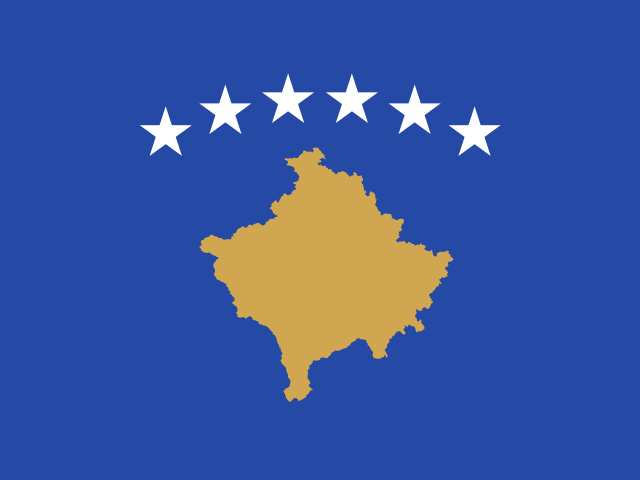
 Southeast Europe
Kosovo is a largely mountainous country in Europe's Balkan region. Its capital is Pristina. Visitors come for historic sites, mountain scenery, hiking and skiing. Kosovo declared independence from Serbia in 2008, but Serbia does not recognise it.
Why go
Explore Ottoman buildings, Orthodox monasteries and ancient ruins.
Visit waterfalls, canyons and mountain landscapes.
Hike in the Sharri, Pashtrik and Accursed Mountains.
Enjoy busy cafés and welcoming local people.
Getting there
By air
- Pristina International Airport has direct flights from several European airline hubs.
- Extra charter flights operate during summer.
- Other nearby airports are in Skopje and Tirana.
By land
- Buses connect Skopje in North Macedonia with Pristina in less than 1½ hours.
- Buses from Tirana reach Pristina and Prizren in 3–4 hours. The source lists a one-way fare of €15 for 2022–2023.
- From Montenegro, the route through Rozaje reaches Peja in about two hours.
Customs
- International Motor Insurance Cards are not accepted. Drivers must buy separate insurance at the border; two weeks of cover usually costs under €20, depending on the vehicle.
- Bring your vehicle registration. If the car belongs to someone else, also bring a power of attorney from the owner.
- The source warns that entering Kosovo first, then travelling directly into Serbia without a Serbian entry stamp, can lead to refusal of entry. This information is marked as last updated in March 2011.
Getting around
Bus
Buses are a cheap and comfortable way to travel between cities. The source gives €4 as an example fare from Pristina to Peja. You usually pay a bus company representative after the journey starts. Some companies do not give a paper ticket. For journeys across borders, buy tickets at Pristina bus station or through a travel agency in Pristina or Prizren. Gjirafa lists times and prices for major bus routes, including some international routes. It does not list minibuses.
Minivan
Minivans run between some towns and cities, often from near the main bus station. They leave when full. Prices are usually similar to regular bus fares.
Train
As of May 2026, the only service listed is two daily trains from Pristina to Peja. The source lists a fare of €3. Check the Kosovo Railways website for the timetable. Interrail rail passes are not valid in Kosovo.
Car
Drive on the right. Watch for sudden overtaking, lane changes, pedestrians and cyclists travelling against traffic. Look out for potholes and sudden changes in the road surface. Parking can be difficult in major cities. Informal car parks commonly charge €1–€2 for the day. Police remove illegally parked vehicles in some areas. Road signs usually show Albanian and Serbian names, though one language may have been scratched out.
What to see and do
Mirusha Waterfalls
A series of waterfalls between Pristina and Gjakova, near the route to Klinë. Rock formations surround a large natural swimming pool.
Peć Patriarchy
This Orthodox monastery is 2 km northwest of central Peja. It has striking paintings and great religious and national importance for many Serbs.
Rugova
Northwest of Peja, Rugova has very steep rock walls that may reach 300 m.
Grand Bazaar, Gjakova
An attractive historic shopping area dating from the 17th century.
Mitrovica Bridge
The bridge marks the division between Serbian and Albanian communities in Mitrovica. Northern Kosovo has an unstable security situation, as described in the safety section.
Novo Brdo Fortress
Visit the remains of a large medieval fortress built on an extinct volcanic cone.
Food and drink
Burek
Baked pastry filled with cheese, meat or spinach. Ayran, a drinkable yogurt, commonly goes with pastries.
Fli
An Albanian pastry served in traditional restaurants.
Kebabs
Kebabs and other Ottoman Turkish-style foods are widely available.
Fish and meat dishes
Village restaurants near larger cities are highlighted for these dishes. Trout, seabass and salmon are popular and are usually fried to order.
Bakery bread
A loaf of bread can cost under €1.
Farm restaurants
Restaurants offering farm-based tourism serve local food made with fresh ingredients and traditional recipes.
Money
Euro (€), currency code EUR
- Credit and debit cards are widely accepted, but carry some cash.
- Money exchange services are available in most cities and larger towns.
- Medical expenses must be paid in cash when you receive care.
Tipping: Tipping is generally not expected from locals, but tips from visitors are welcome. More expensive venues may expect a tip; in taxis, you can round up to the nearest euro or half euro.
Typical costs
- Pristina–Peja bus: €4 in the source's example.
- Pristina–Peja train: €3, listed for May 2026.
- Informal parking: commonly €1–€2 for the day.
- A loaf of bread from a bakery: under €1.
- A local SIM card: €3.
- A doctor consultation and a few prescribed medicines: around €20.
- Border car insurance for two weeks: usually under €20, depending on the vehicle.
Language
- Albanian is spoken by most people and is an official language.
- Serbian is also official and is spoken in Serb-majority areas, including the north.
- Younger people in major cities are likely to understand English.
- Older people are more likely to understand German.
- Turkish can be useful, especially in Prizren.
Staying safe
- Northern Kosovo has an unstable security situation and has seen violent demonstrations. The source's July 2026 warning says some governments advise against non-essential travel there.
- Travel between Serbia and Kosovo may be disrupted.
- People are generally friendly and welcoming to tourists, and crime is not usually a major concern.
- Land mines were used during the wars, especially in rural central Kosovo and near the Albanian border. Major clearance work followed, and the source reports no incidents for years.
Staying healthy
- Tap water in cities is safe to drink.
- Foreign visitors can receive treatment at the public hospital in Pristina. Staff from your accommodation may be able to help translate.
- Public hospital conditions can be poor, with basic hygiene supplies sometimes missing and limited equipment.
- Medical expenses must be paid in cash at the time of treatment. A doctor consultation and a few prescribed medicines typically cost around €20.
Phone and internet
- A local SIM card costs €3. Vala and Ipko are the two main mobile providers.
- You must show identification, such as a passport, and register the card.
- Many Balkan mobile providers offer free roaming across Balkan countries. Ask your provider how your package works across borders.
- Most bars, cafés and restaurants offer free Wi-Fi to customers.
Where to stay
- Cheap hostels and apartments are easy to find in Pristina, Prizren, Peja and Gjakova.
- Guesthouses around Kosovo offer inexpensive places to stay.
- Small hotels and motels are available.
- Two- and three-star hotels are more common, while Pristina has three five-star hotels.
Outdoor adventures in Kosovo
Kosovo is largely mountainous, with hiking in the Sharri, Pashtrik and Accursed Mountains and skiing at Brezovica. Cross-border trails, waterfalls and caves offer more ways to explore. Summers are very warm, while winters are cold and snowy.
Brezovica Ski Centre
SkiingSouthern Kosovo
WinterSki at Brezovica in the Sharri mountains. GuideKS, the Kosovo Tourist Guides Association, can help you find a local guide suited to your activity.
- The ski centre has old infrastructure.
Rugova Gorge
HikeWestern Kosovonear Peja
Explore the gorge northwest of Peja. GuideKS can connect you with a local guide for outdoor activities.
Peaks of the Balkans
Trek
Ask GuideKS to connect you with a local hiking guide for this cross-border trail.
Via Dinarica
Trek
Ask GuideKS to connect you with a local hiking guide for this cross-border trail.
Sharri Mountains
HikeSouthern Kosovo
Arrange a mountain hike through a local guide. GuideKS can help you find one.
Accursed Mountains
Hike
Ask GuideKS to connect you with a local guide for a mountain hike.
Pashtrik Mountains
Hike
Ask GuideKS to connect you with a local hiking guide.
Mirusha Waterfalls
More to doWestern Kosovo
Visit the waterfalls between Prishtina and Gjakova, on the way to Klinë.
White Drin Waterfall at Radavc
More to doWestern Kosovonear Peja
SummerVisit Radavc north of Peja, between Peja and Montenegro, where the White Drin River begins.
- The access road is narrow, with the river on one side.
Gadime Caves
CaveSouth-eastern Kosovo
Explore the Gadime caves in the region along the Prishtina–Skopje road. GuideKS can help you find a suitable local guide.
Shala e Bajgores
HikeNorthern Kosovonear Mitrovica
Head to the rural area east of Mitrovica for hiking. GuideKS can connect you with a local guide.
- Northern Kosovo has an unstable security situation, with violent demonstrations reported.
- Some governments advise against non-essential travel to northern Kosovo.
Lake Area near Zubin Potok
HikeNorthern Kosovonear Zubin Potok
Explore the hiking area around the lake outside Zubin Potok. GuideKS can help you find a local guide.
- Northern Kosovo has an unstable security situation, with violent demonstrations reported.
- Some governments advise against non-essential travel to northern Kosovo.
White Drin Canyon
More to doWestern Kosovonear Gjakova
Visit the canyon near Gjakova. Fshajt Bridge stands at its start.
Airports, metros and trains in Kosovo
Airports with scheduled flights
- PRNPriština Adem Jashari International AirportPrishtinaMain international airport
People and safety in Kosovo
Religion
Most people are Muslim. Mostly one faith.
- Muslim87%
- Christian11%
- No religion2%
LGBT+ travellers
Legal
- Same-sex marriage is not recognised.
- Laws protect against discrimination.
Who can visit without a visa
Travellers from 110 of 198 countries can visit Kosovo easily: no visa, a visa at the airport, or a short online form.
- Visa not required110
- Visa required88
Who can visit easily, by part of the world
For each part of the world: how many countries' travellers can come easily. Easy means no visa, a visa at the airport, or a short online form.
- Oceania14 of 14 countries
- Europe41 of 45 countries
- Americas27 of 35 countries
- Asia20 of 50 countries
- Africa8 of 54 countries
Questions
What is the weather like?
Summers are very warm. Winters are cold and snowy.
Can I pay by card?
Credit and debit cards are widely accepted, but keep cash as a backup. Kosovo uses the euro.
Can I travel between cities without booking online?
Yes. You usually pay for domestic bus journeys on the bus after it leaves; tickets for cross-border journeys can be bought at Pristina bus station or through travel agencies in Pristina or Prizren.
Will people understand English?
Younger people, especially in Pristina and Prizren, are likely to understand English. Older people are more likely to understand German.
Is tap water safe to drink?
Tap water in cities is safe to drink.
Where can I find cheap accommodation?
Cheap hostels and apartments are easy to find in Pristina, Prizren, Peja and Gjakova. Guesthouses elsewhere in Kosovo also offer inexpensive stays.
What local food should I try?
Try burek filled with cheese, meat or spinach, or fli, an Albanian pastry. Kebabs are also widely available.
Can I buy a local SIM card?
Yes. The source lists a price of €3, and you must show identification and register the card; the main providers are Vala and Ipko.
Is northern Kosovo safe to visit?
The source's July 2026 warning describes an unstable situation with violent demonstrations. Some governments advise against non-essential travel there, and travel between Serbia and Kosovo may be disrupted.
Do I need to tip?
Tips from visitors are welcome, though tipping is generally not expected from locals. More expensive venues may expect tips, and taxi fares can be rounded up to the nearest euro or half euro.
 Reviewed by @snuck