
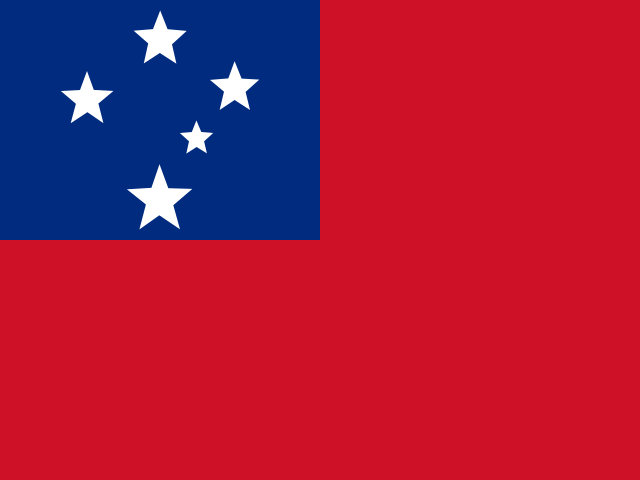
 Polynesia
Samoa is a South Pacific island nation in Polynesia with 10 islands. Its two main islands, Upolu and Savaii, have volcanic mountains, green forests, white-sand beaches and clear lagoons. The capital is Apia.
Why go
White-sand beaches and clear lagoons.
Coral gardens for snorkelling and diving.
Waterfalls, caves, blowholes and lava fields.
Traditional villages and Samoan culture.
Simple beach stays in traditional shelters called fales.
Best time to go: May to October is the dry season. The rainy season, which can bring tropical cyclones, runs from October to March. The average annual temperature is 26.5°C.
Getting there
By air
- Faleolo International Airport is about a 45-minute drive from Apia. Its airport code is APW.
- The source lists flights with Air New Zealand, Fiji Airways, Qantas and Virgin Australia.
- Many major hotels offer airport transfers on request, often free of charge. Taxis are also available.
By sea
- A ferry runs weekly from Pago Pago in American Samoa.
- The MV Tokelau connects Apia Harbour with Tokelau twice a month.
Getting around
Car
Drive on the left. International driving licences are not accepted. You need a temporary local licence. A temporary licence costs WS$21 and lasts one month. Get it from the Samoa Tourism Authority at the airport or in Apia, the Land Transport Authority in Apia, or some rental companies. Traffic jams are common in Apia. Driving elsewhere can also be slow because of speed bumps and cautious or inexperienced drivers.
Bus
Buses are cheap, and a ride can be a memorable experience. On Upolu, routes leave from two places in Apia: near the main market and behind the flea market. On Savaii, all routes start near the ferry wharf at Salelologa.
What to see and do
Falealupo Rainforest Preserve
This preserve on Savaii has a short walkway through the treetops. You can also sleep in the trees.
Lake Lanoto'o National Park
This park on Upolu has a lake where introduced goldfish grow unusually large.
O le Pupu Pue National Park
See Togigoiga Waterfalls, the Ma Tree and the Coastal Lava Cliff Walk. There is a large lava field at the end of the walk.
Waterfalls and Papase'ea Sliding Rocks
Both main islands have impressive waterfalls, with some drops reaching 100 metres. At Papase'ea on Upolu, the vegetation-covered rocks allow a slide into the pool below.
Savaii blowholes and lava fields
Seawater shoots through tubes in volcanic rock at the blowholes. The island also has lava fields left by volcanic eruptions.
Traditional villages
Look for round or oval fales with wooden posts and domed roofs. Villages have strict rules, so follow local guidance.
Food and drink
Umu cooking
Food is cooked on hot stones under banana leaves. Ingredients can include pork, fish, taro, breadfruit and green bananas.
Oka
Small pieces of raw fish marinated in lemon juice, coconut cream, salt and chopped onions.
Palusami
Taro leaves filled with coconut cream, onions and some taro, then cooked in an umu.
Corned beef
A widely used food in Samoa, often served alongside umu dishes.
Apia market food
The market is a good place to find local food and buy fruit before travelling around the islands.
Restaurants
Most restaurants are casual and fairly inexpensive, with Western-style and Chinese food common. Outside Apia, many of the best places to eat are at hotels or resorts.
Money
Samoan tālā (WST), also written as WS$, T, ST or SAT. One tālā equals 100 sene.
- Changing money is relatively easy, including at airport banks.
- Haggling is considered rude.
- Most shops open from 09:00 to 17:00 Monday to Friday and on Saturday mornings. Some supermarkets also open on Sundays.
- Apia Public Market sells local food, produce, bark cloth and carved kava bowls. The Apia Flea Market is in the old public market building.
Tipping: Tipping is not practised or expected.
Typical costs
- Temporary local driving licence: WS$21 for one month.
- A 750 ml glass bottle of Coke, Fanta or Sprite: about WS$4.
- Public internet access in Apia: around WS$12 per hour.
- Internet at the CSL cafe in Apia: around WS$5 for 30 minutes.
- Beach fales are described as inexpensive. Villages often charge a small fee to use their beaches.
Language
- Samoan and English are official languages.
- English is widely spoken and understood in Apia and many tourist resorts.
- English is less commonly understood in villages. Learning a few Samoan words can help.
Staying safe
- Samoa is generally safe, with low crime rates. Theft does happen, so take sensible precautions with your belongings.
- Free-roaming dogs can be a problem in Apia. Most will ignore you if you ignore them.
- Small earthquakes happen often. A devastating tsunami struck the south coast of Upolu in September 2009.
- The rainy season from October to March is also the tropical cyclone season.
Local customs
Do
- Follow village rules and the guidance of village chiefs, called matai.
- Wear modest clothing away from the beach. Keep shorts knee length and wear a shirt.
- A lavalava, or sarong, is nearly always acceptable clothing.
- Remove your shoes before entering a house or budget accommodation.
- Respect Sunday as a holy day. Most shops and businesses close.
Don't
- Do not walk through villages on Sundays.
- Avoid walking through villages during the sunset prayer curfew. It usually lasts about half an hour.
- Do not wear swimwear away from the beach.
- Do not sunbathe topless or bathe nude.
- Do not haggle over prices; it is considered rude.
Laws to know
- Businesses must use the local currency. Doing business in a foreign currency is illegal.
Staying healthy
- Use insect repellent and mosquito nets. Dengue fever and chikungunya outbreaks occur, and mosquitoes that spread dengue usually bite during the day.
- Drink bottled water. It is cheap and easy to find.
- Wear footwear when snorkelling without fins. Watch for cone shells, sea urchins and fire coral.
- Centipedes can give a very painful bite.
Phone and internet
- Apia has several public internet access points. There are also a couple of internet cafes on Savaii.
- Check with your hotel before staying in remote parts of Upolu or Savaii if you need Wi-Fi. Most hotels in those areas do not have it.
- The CSL cafe opposite McDonald's in Apia offers internet access for around WS$5 per 30 minutes.
- CSL also sells credit for Wi-Fi lavaspots around Apia and on Savaii: WS$15 for one hour or WS$70 for 10 hours. Some hotels sell the same credit at higher prices.
Where to stay
- Beach fales offer an enjoyable, inexpensive stay. Ask other travellers for suggestions.
- The Samoa Tourism Authority can provide a list of beach fales at info@samoa.travel.
- Samoa also has resorts, hotels and guest houses.
- Staying in a village is possible. Follow village rules and local customs.
Outdoor adventures in Samoa
Samoa has coral gardens, turquoise lagoons and village-owned beaches, with volcanic mountains inland. Upolu and Savaii offer waterfalls, forest walks, lava landscapes and scuba diving.
To Sua Ocean Trench
More to do
Visit the trench to see its cave-like rock formations. Access arrangements are not specified.
Papase'ea Sliding Rocks
More to doUpolu
Visit the falls on Upolu to slide into the pool below. Transport arrangements are not specified.
Falealupo Rainforest Preserve canopy walkway
HikeSavaii
Visit Falealupo Rainforest Preserve and follow its short canopy walkway.
Lake Lanoto'o National Park
WildlifeUpolu
Visit the national park on Upolu to see the lake. Route and transport details are not specified.
Coastal Lava Cliff Walk
HikeO le Pupu Pue National Park, Upolu
Follow the Coastal Lava Cliff Walk in O le Pupu Pue National Park.
Togigoiga Waterfalls
More to doO le Pupu Pue National Park, Upolu
Visit the waterfalls within O le Pupu Pue National Park. Access details are not specified.
Sopoaga Falls
More to doUpolu
Visit Sopoaga Falls on Upolu. Transport and access details are not specified.
Mt. Matavanu lava fields
More to doSavaii
Use Savaii's sealed road, which passes through the lava fields left by the 1911 eruption.
Scuba diving around Upolu
Scuba divingUpolu
Arrange diving with a dive company operating on Upolu.
Scuba diving around Savaii
Scuba divingSavaii
Arrange diving with a dive company operating on Savaii.
Snorkelling in Samoa's coral gardens
Snorkelling
Explore Samoa's coral gardens by snorkelling. Specific entry points and operators are not specified.
- Beware of purple cone shells, sea urchins and fire coral.
- Wear footwear if you are snorkelling without fins.
Fishing charters from Apia harbour
More to doUpolunear Apia
Book a fishing charter. Most charter companies operate from Apia harbour.
Golf on Upolu
More to doUpolu
Choose a course on Upolu: two are near Apia, one is near the airport, and a nine-hole course is on the south coast.
Airports, metros and trains in Samoa
Airports with scheduled flights
- APWFaleolo International AirportApiaMain international airport
People and safety in Samoa
Religion
Most people are Christian. Mostly one faith.
- Christian97%
- No religion3%
LGBT+ travellers
Same-sex relationships are illegal
- The law allows up to 7 years in prison.
- Legal gender change is recognised.
- Some laws protect against discrimination.
Check your own government's travel advice before you go, and be careful with public displays of affection and dating apps.
Women travellers
Ranked #89 of 181 countries for women's safety, inclusion and justice.
74% of women say they feel safe walking alone at night where they live.
Who can visit without a visa
Travellers from 198 of 198 countries can visit Samoa easily: no visa, a visa at the airport, or a short online form.
- Visa not required111
- Visa on arrival87
Who can visit easily, by part of the world
For each part of the world: how many countries' travellers can come easily. Easy means no visa, a visa at the airport, or a short online form.
- Africa54 of 54 countries
- Asia50 of 50 countries
- Europe46 of 46 countries
- Americas35 of 35 countries
- Oceania13 of 13 countries
Questions
When is the best time to visit Samoa?
May to October is the dry season. The rainy season, which can bring tropical cyclones, runs from October to March.
How do I get from the airport to Apia?
The drive takes about 45 minutes. You can use a taxi, arrange a hotel transfer or take a local bus during the day.
What money should I use?
Use Samoan tālā, often written as WS$. Money exchange is relatively easy, and doing business in a foreign currency is illegal.
Can I get around by bus?
Yes, buses are cheap. Upolu routes leave from Apia, while Savaii routes start near the Salelologa ferry wharf.
Will people understand English?
English is widely understood in Apia and many tourist resorts. It is less commonly understood in villages.
What is a beach fale?
A fale is a traditional Samoan shelter with wooden posts and a domed roof. Beach fales offer an inexpensive place to stay.
What local food can I try?
Try oka, made with raw fish and coconut cream, or palusami, made with taro leaves and coconut cream. Apia's market is a good place to find local food.
Can I drink the water?
Drink bottled water. It is cheap and readily available.
What should I wear in villages?
Wear a shirt and modest clothing, with shorts reaching the knee. Keep swimwear for the beach; a lavalava, or sarong, is nearly always acceptable.
Will I have internet access?
Public internet access is available in Apia, and Savaii has a couple of internet cafes. Ask your hotel about Wi-Fi before staying in remote areas.
 Reviewed by @snuck