
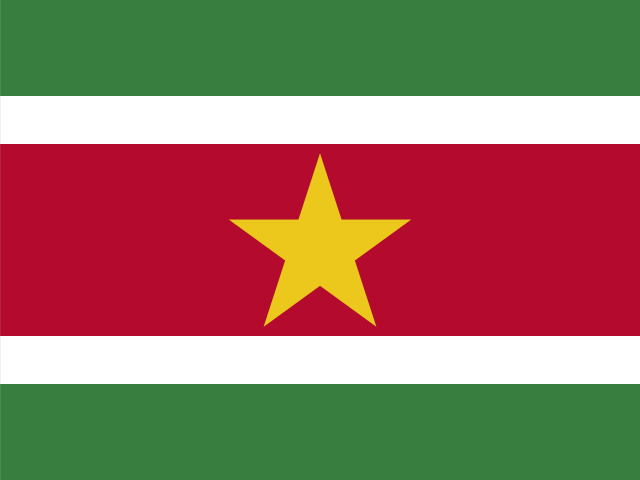
 South America
Suriname is a small country on South America's northeast coast. It has a mix of cultures, a historic capital called Paramaribo, and large areas of Amazon rainforest.
Why go
Explore Paramaribo's historic centre and old wooden buildings.
Visit rainforest reserves, waterfalls and rivers.
Watch leatherback sea turtles at Galibi and Albina.
Try food with Indian, Chinese, Javanese and Creole influences.
Visit Maroon and Indigenous villages with a guide.
Best time to go: Mid-August to mid-December is a dry period, but temperatures can reach 35–40°C. The weather is hot and humid throughout the year.
Getting there
By air
- Johan Adolf Pengel International Airport is the international airport named in the source.
By land
- Daily minibuses run from Georgetown in Guyana towards the Suriname border. Ask at Berbice car park.
- From Georgetown, minibus 63a goes to Molson Creek in at least three hours. Continue by ferry to South Drain.
- The bus from Albina, near French Guiana, to Paramaribo costs around €20.
By sea
- A regular river ferry connects Guyana and Suriname. The source lists a daily 11:00 departure from Molson Creek to South Drain, taking about 30 minutes.
- Small boats and a small ferry connect Albina with St. Laurent in French Guiana. The usual price is around €5 per person.
Customs
- On the Molson Creek route, go through customs on the Guyanese side before taking the ferry.
- The source warns that entering Nieuw Nickerie directly by water from Guyana is illegal.
Getting around
Buses and minibuses
Minibuses and taxis are common for both short and long journeys. Several long-distance bus companies connect Paramaribo with other towns and neighbouring countries. Nationaal Vervoer Bedrijf, the state public transport company, runs more than 60 routes across eight districts.
Rental car
Drive on the left. Most roads have no painted traffic lines. Rent a four-wheel drive vehicle for dirt roads. Some rental companies restrict forest travel, so explain your route before renting. Slow down for speed bumps marked 'drempel'. They can be very high and often come in pairs. Drive slowly over bridges, which may be in poor condition. The source says the Carolina bridge on the route to Jodensavanne is partly collapsed and closed, with a small car ferry available. Fill your fuel tank before leaving paved roads.
Taxis and ride booking
Taxis are widely used for short and long journeys. Ride Technologies is the ride booking app listed in the source. Uber does not operate in Suriname.
Boats
You can hire boats along riverbanks. Travel with a tour guide. Passenger ferries cross the Suriname River between Paramaribo and Meerzorg.
What to see and do
Paramaribo historic centre
See old wooden buildings in a centre recognised by the United Nations Educational, Scientific and Cultural Organization for its heritage. Walk along Waterkant, visit Fort Zeelandia and see Saint Peter and Paul Cathedral.
Central Suriname Nature Reserve
This rainforest reserve includes Raleigh waterfalls and Mount Voltzberg.
Galibi and Albina beaches
These beaches offer chances to watch large leatherback sea turtles breeding.
Brownsberg Nature Park and Brokopondo Reservoir
Explore a natural area associated with one of the world's largest artificial lakes.
Tonka Island
Visit a nature tourism project set up by Saramaccaner Maroons.
Jodensavanne
Ruins mark a historic Jewish settlement dating from the 17th century.
Food and drink
Chicken masala with roti
A popular local meal with Indian influences.
Javanese food
Food with Indonesian influences is part of Suriname's varied cuisine.
Chinese food
Chinese dishes are among the country's main food traditions.
Creole food
Creole cooking is another part of the country's mix of cuisines.
Waterkant food stands
Stop for food along Paramaribo's waterfront street.
Fresh fruit juice
Try passion fruit, locally called markoesa, or soursop, called zuurzak. Bottled juices often contain added sugar, so ask for freshly made juice if you want pure juice.
Money
Surinamese dollar (SRD)
- Exchange money at banks or currency exchange offices, called cambios.
- Cash machines are available in Paramaribo and larger towns in the north. RBTT machines accept most international bank cards, while DSB accepts Dutch bank cards.
- Credit card payments are uncommon in shops, hotels and restaurants. An extra charge of 2–6% may apply.
- Tours, hotels and more expensive restaurants often quote prices in euros or US dollars, then convert them into local currency.
Typical costs
- Package tours beyond Paramaribo cost around €100–200 per day, according to the source's 2025 figures.
- The bus from Albina to Paramaribo costs around €20.
- The boat or ferry between Albina and St. Laurent usually costs around €5 per person.
- Food and accommodation are relatively cheap, but travel into the interior can be expensive.
- Clothing and gifts have prices similar to Western Europe and the United States.
Language
- Dutch is the official language.
- English is widely spoken.
- Sranang Tongo is widely used between different ethnic groups.
- Sarnami, a form of Hindi, and Javanese are also spoken.
- Chinese languages include Mandarin, Hakka and Cantonese.
- Spanish and Portuguese are also spoken.
- Drempel
- Speed bump; used on road signs.
- Markoesa
- Passion fruit.
- Zuurzak
- Soursop.
- Blaka Watra
- Black water.
Staying safe
- General emergency112
- Fire department110
- Emergency medical services113
- Police111
- Police; also listed for emergencies115
- Avoid going out alone at night.
- Avoid Paramaribo's Palm Garden at night. The source describes it as a crime area with drug trading.
- Stay in areas where police protection is available, and take care outside the city centre.
- Do not enter the forest interior alone. Use a guide for boat and forest trips.
Local customs
Do
- Ask permission before photographing people or culturally important places.
- Follow your local guide's advice about photography.
- Respect local cultures and the environment, including trees and places considered sacred.
Don't
- Do not assume you can photograph sacred trees or places without consent.
Staying healthy
- Use mosquito repellent. The source identifies dengue and Zika as mosquito-related health concerns.
- Before a jungle trip, ask a health clinic or pharmacist whether you need malaria prevention medicine for your destination.
- The source recommends yellow fever, tetanus-diphtheria and hepatitis A vaccinations.
- Tap water is drinkable in Paramaribo, but not elsewhere.
Where to stay
- Paramaribo and Nickerie have hostels and guesthouses.
- Rainforest lodges and resorts offer places to stay while exploring the interior.
- For a rainforest stay, consider buying a hammock in Paramaribo. Hammocks supplied by forest guesthouses may be less clean because washing facilities are limited.
- Bring mosquito repellent and sunblock for stays in the forest.
Outdoor adventures in Suriname
Suriname offers rainforest trips, river journeys, wildlife watching and beaches where sea turtles nest. Most visitors explore beyond Paramaribo on package tours, though independent travel is possible and can be challenging.
Central Suriname Nature Reserve, Raleighvallen and Voltzberg
WildlifeSurinamese Rainforest
Arrange an inland package tour. Contact the lodge directly to check which guides and activities it provides.
- Do not enter the forest alone.
Bigi Pan Nature Reserve
WildlifeWest Coast
Visit on a wildlife-watching tour. Package tours are the usual way visitors travel beyond the capital.
Brownsberg Nature Park
WildlifeSurinamese Rainforestnear Paramaribo
Arrange a nature trip from Paramaribo. The park is close to the capital.
- Do not enter the forest alone.
Galibi sea turtle watching
WildlifeEast Coast
Arrange a visit to the nesting beaches in Galibi Nature Reserve.
Albina sea turtle watching
WildlifeEast Coastnear Albina
Visit the beaches at Albina to watch nesting sea turtles. Transport details are not given.
Paramaribo dolphin watching
WildlifeParamaribonear Paramaribo
Join a dolphin-watching tour from Paramaribo.
Colakreek swimming
More to donear Paramaribo
Visit the recreational park about 50 km from Paramaribo for a swimming outing.
Nature Resort Kabalebo rainforest watching
WildlifeSurinamese Rainforest
Visit through Nature Resort Kabalebo. Check directly with the lodge about guides and activities.
- Do not enter the forest alone.
Marowijne River boat trip
More to doEastern Suriname
Take a boat trip along the Marowijne River to see the forest and visit riverside villages.
- Do not enter the forest alone.
Commewijne plantation cycling
CyclingCommewijne
Explore the quiet, green plantation area by bike, riding between banana plants and former plantations.
Tonka Island ecotourism visit
More to doBrokopondo Reservoir
Visit the ecotourism project on Tonka Island. Transport details are not given.
Airports, metros and trains in Suriname
Airports with scheduled flights
- PBMJohan Adolf Pengel International AirportParamariboMain international airport
Trains
- Rail network
- 166 km
People and safety in Suriname
Religion
Most people are Christian. Very mixed.
- Christian52%
- Hindu20%
- Muslim15%
- No religion5%
- Folk religions5%
- Other2%
- Buddhist<1%
LGBT+ travellers
Legal
- Same-sex marriages from abroad are recognised.
- Legal gender change is recognised.
- Laws protect against discrimination.
Women travellers
Ranked #51 of 181 countries for women's safety, inclusion and justice.
64% of women say they feel safe walking alone at night where they live.
Who can visit without a visa
Travellers from 126 of 198 countries can visit Suriname easily: no visa, a visa at the airport, or a short online form.
- Visa not required126
- eVisa63
- Visa required8
- Admission restricted1
Who can visit easily, by part of the world
For each part of the world: how many countries' travellers can come easily. Easy means no visa, a visa at the airport, or a short online form.
- Europe38 of 46 countries
- Americas27 of 34 countries
- Asia37 of 50 countries
- Oceania8 of 14 countries
- Africa16 of 54 countries
Questions
Can I get by with English?
Yes. English is widely spoken, although Dutch is the official language.
When is the drier season?
Mid-August to mid-December is a dry period. It can still be very hot, with temperatures reaching 35–40°C.
Can I pay by credit card?
Credit card payments are uncommon, and an extra charge of 2–6% may apply. Cash machines are available in Paramaribo and larger northern towns.
Can I use Uber?
No. The source lists Ride Technologies as the only operating ride booking app.
Is it easy to explore the rainforest independently?
Independent travel is possible but challenging. Most visitors go beyond Paramaribo on package tours, and you should not enter the forest alone.
Can I drink tap water?
The source says tap water is drinkable in Paramaribo, but not elsewhere.
What local food should I try?
Chicken masala with roti is a popular choice. Chinese, Javanese and Creole food are also available.
Where can I find budget accommodation?
Paramaribo and Nickerie have hostels and guesthouses.
Is it safe to walk around at night?
Avoid going out alone at night. In Paramaribo, avoid the Palm Garden after dark.
Should I ask before taking photographs?
Yes, ask when appropriate and follow your guide's advice. Some communities consider particular trees and places sacred.
 Reviewed by @snuck