Scam in PeruHotels and rooms
Arrival touts steering you to another hotel or seller in Peru
How it works
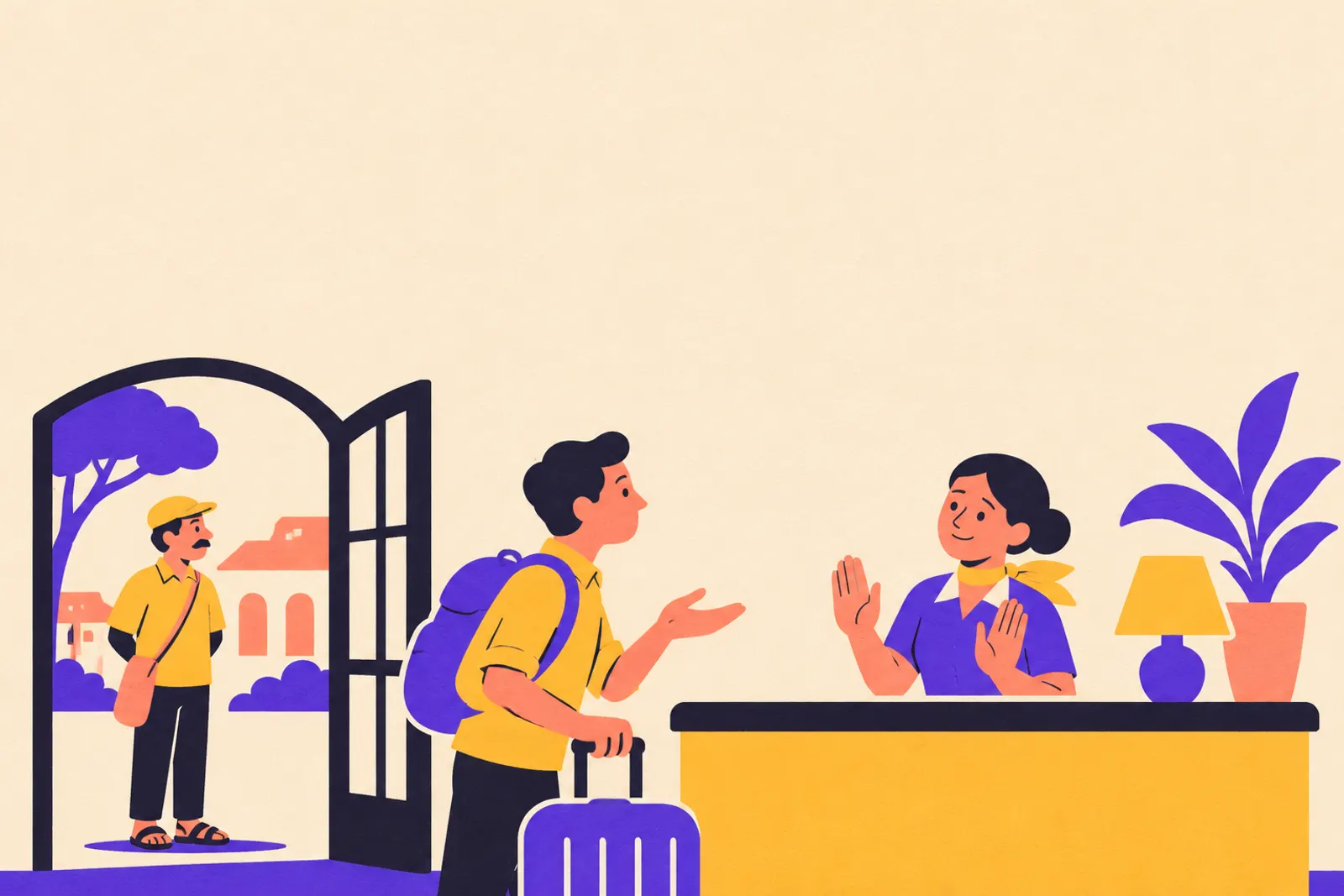
Touts approach new arrivals and try to lead them to accommodation or sell services. They may use information you share to invent reasons why you should change your plans.
Warning signs
- A stranger immediately asks where you are staying.
- Someone uses your answer to argue that you should go elsewhere.
- You are pressed to follow someone or pay on arrival.
How to avoid it
- Choose your hotel before arriving.
- Keep your booking details and travel plans private.
- Go directly to your chosen accommodation.
- Arrange tours or tickets through a business you have checked.
If it happens to you
Stop the conversation and move to a staffed desk or your planned accommodation. If you have paid, keep any receipt and ask clearly for the service or a refund.
- Get to a safe, staffed place. If someone is threatening you, prioritise your safety over belongings.
- For immediate danger or injury, call emergency services. Avoid chasing thieves or confronting armed people.
- Block stolen cards and contact your bank about unauthorised payments. Lock a stolen phone and secure affected accounts.
- Save receipts, booking messages and transaction details. Write down the time, location and any vehicle details you safely remember.
- Report the incident to police and ask how to obtain a report copy. Keep the report for insurance or a payment dispute.
- Contact your insurer. If your passport is missing, contact your embassy or consulate for replacement-document advice.
What travellers report
Posts about this scam on other sites, summarised in our words. Open one to read the original.
- Redditr/GoingToPeru2026Bad introduction to PeruA commenter recounts an airport taxi dispute in which the driver also tried to persuade two travellers to use a different hotel.Read on Reddit
- WebPeru Travel GuideThe guide warns that airport and bus-terminal touts invent stories about travellers’ chosen hotels to redirect them elsewhere.Read on Web
Questions
What is the arrival touts steering you to another hotel or seller scam in Peru?
Touts approach new arrivals and try to lead them to accommodation or sell services. They may use information you share to invent reasons why you should change your plans.
How can I spot it early?
A stranger immediately asks where you are staying. Someone uses your answer to argue that you should go elsewhere. You are pressed to follow someone or pay on arrival.
How do I avoid arrival touts steering you to another hotel or seller in Peru?
Choose your hotel before arriving. Keep your booking details and travel plans private. Go directly to your chosen accommodation. Arrange tours or tickets through a business you have checked.
What should I do if it happens to me?
Stop the conversation and move to a staffed desk or your planned accommodation. If you have paid, keep any receipt and ask clearly for the service or a refund.
Where in Peru does this happen?
Airports, bus stations and streets where travellers arrive.
How common is this scam in Peru?
Common. Petty theft is a concern in Peru, and armed robberies of tourists are described as fairly common. Taxi robberies, inflated fares, misleading touts and false money are the main risks to prepare for. Choose transport carefully, check prices before paying and keep valuables out of sight.
Who can I report it to?
Emergency services: dial 911 for an emergency. The older number 105 can also connect you with police. Tourist police: ask tourist police for help in person. They are described as wearing white shirts and normally speaking English. They are present in downtown Arequipa. Police: report theft, robbery or fraud and request a report. To obtain a copy, the stated process requires paying S/3 at Banco de la Nación during working days. Serenazgo: in Lima and some larger cities, ask this local police service for help. It does not provide tourist-focused services. Card issuer or bank: use your bank's official app or contact number to block cards, report unauthorised transactions and ask about a dispute. Embassy or consulate: contact your country's embassy or consulate if your passport is stolen or you need consular help. Use its official contact details. Travel insurer: contact the claims or emergency-assistance team. Keep police reports, receipts and evidence of losses. Transport company, booking seller or shop: raise a complaint through the business's official contact channel. Provide your receipt, booking details and the price or service you agreed.
What number do I call in an emergency in Peru?
All emergency services: 911, Police, older number: 105.
 Reviewed by @snuck