Scam in EgyptShopping
Market price changed from per kilo to per half-kilo in Egypt
How it works
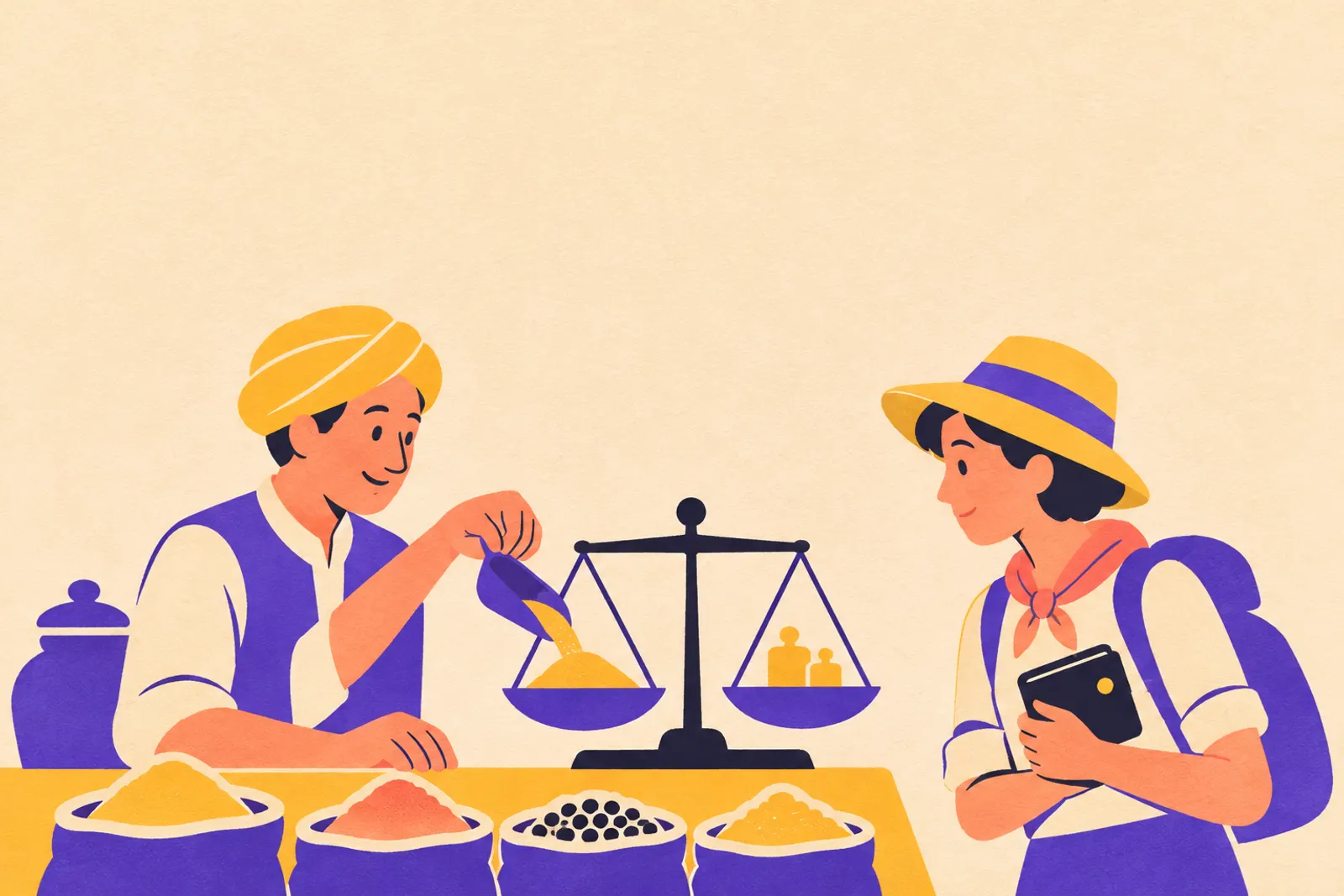
A sign gives a price in piastres per kilogram, but the seller tells a tourist that it applies to half a kilogram. This doubles the apparent price for the same weight.
Warning signs
- The spoken price or unit differs from the sign.
- The seller changes the meaning of the price after noticing you are a tourist.
How to avoid it
- Learn the numerals used on price signs.
- Confirm the price per kilogram before weighing.
- Ask for a clear weight and total before paying.
If it happens to you
Point out the displayed price and ask for the correct total. Decline the purchase if the seller will not clarify.
- Get to a safe, public place. End the interaction calmly and do not chase a thief.
- Check whether anyone needs medical help. Call 123 for an ambulance if there is an urgent medical problem.
- Block missing cards and report unauthorised payments to your card issuer. Secure affected accounts and a stolen phone.
- Save receipts, booking details, messages and payment records. Write down the time, location, amount and any vehicle or seller details.
- Report crime to police or a Tourism Police kiosk in a tourist area. Call 122 if you need urgent police assistance, and ask for a report reference.
- Contact your insurer, booking platform or transport operator as relevant. Contact your embassy or consulate if your passport is missing or you need consular help.
Questions
What is the market price changed from per kilo to per half-kilo scam in Egypt?
A sign gives a price in piastres per kilogram, but the seller tells a tourist that it applies to half a kilogram. This doubles the apparent price for the same weight.
How can I spot it early?
The spoken price or unit differs from the sign. The seller changes the meaning of the price after noticing you are a tourist.
How do I avoid market price changed from per kilo to per half-kilo in Egypt?
Learn the numerals used on price signs. Confirm the price per kilogram before weighing. Ask for a clear weight and total before paying.
What should I do if it happens to me?
Point out the displayed price and ask for the correct total. Decline the purchase if the seller will not clarify.
Where in Egypt does this happen?
Fruit and vegetable market stalls.
How common is this scam in Egypt?
Occasional. Tourist scams and persistent sales pressure are common in Egypt, especially in Luxor and busy tourist areas in Cairo. The main problems are inflated fares, shop diversions, misleading sales claims and demands for payment after unwanted help. Pickpocketing also happens, while reports of drink spiking in budget accommodation deserve particular care.
Are there similar scams in Egypt?
Yes: large tourist markups in markets, papyrus museums, inflated discounts and imitation papyrus, tea used to pressure a perfume purchase.
Who can I report it to?
Police: call 122 for urgent police assistance. Report theft, threats or suspected fraud and ask for a report reference. Tourism Police: look for a designated Tourism Police kiosk in a tourist area. Explain what happened and show any receipts or other evidence. Card issuer or bank: use your banking app or the issuer's official contact number to block a missing card and report unauthorised transactions. Ride-hailing app, transport operator or booking platform: use its official support channel. Include the booking, driver messages, receipt and agreed price. Travel insurer: contact the claims or emergency-assistance service listed in your policy. Keep police references and supporting documents. Your embassy or consulate: use its official contact details for a lost passport, detention or serious crime. Ask what consular help is available.
What number do I call in an emergency in Egypt?
Police: 122, Ambulance: 123, Fire: 180, Highway: 136.
 Reviewed by @snuck