Scam in North KoreaShopping
Overcharging through missing change and rough conversions in North Korea
How it works
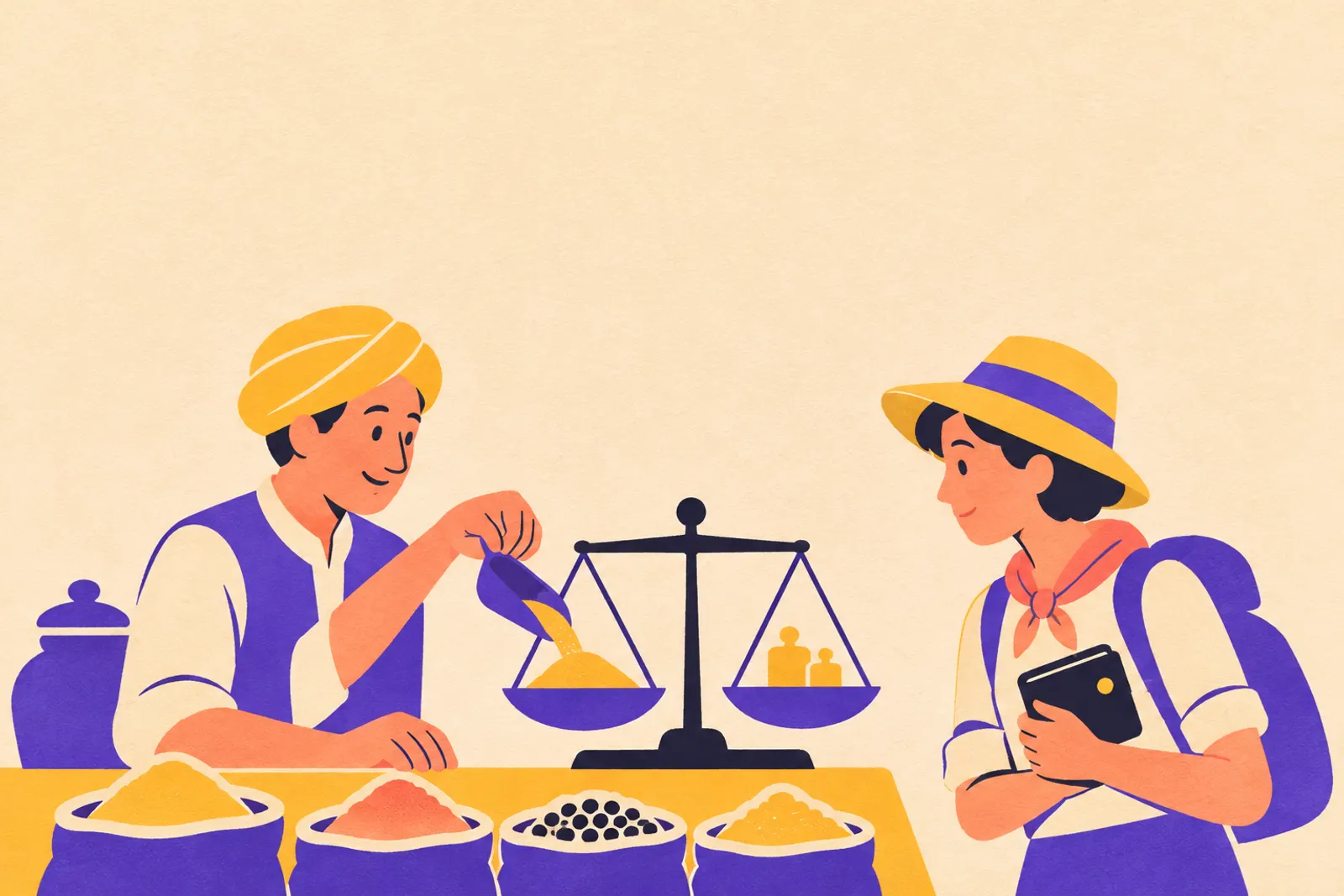
Sellers often lack change. If you pay with a large note, you may end up paying more than the price. Rough conversions between foreign currencies can also make the final amount hard to check. These problems do not always mean deliberate fraud.
Warning signs
- The seller cannot give change for your note.
- The price is shown in one currency but payment is calculated in another.
- The final amount is unclear before you pay.
How to avoid it
- Carry plenty of small notes in the currencies accepted on your tour.
- Agree on the price, payment currency and change before handing over money.
- Check the conversion and count your change before leaving.
- Ask your guide to explain any unclear amount.
If it happens to you
Calmly point out the difference and ask your guide to help resolve it. Avoid an argument.
- Stay calm. Do not argue, threaten anyone or pursue a suspected thief.
- Tell your guide immediately and stay within approved areas.
- Check what is missing or how much you were overcharged. Write down the place, time, currency and amount.
- Keep receipts and other payment records. Follow local restrictions when gathering evidence; photography is prohibited at Tonghil Market.
- If a bank card or device is missing, contact its issuer or service provider when possible to block access.
- Ask your guide to help report theft to police. Contact an embassy that can assist you if documents are missing or the incident is serious.
What travellers report
Posts about this scam on other sites, summarised in our words. Open one to read the original.
- Travel blog2018Money And The North Korean Economy – The Rambling WombatA traveller reported receiving mixed currencies and sometimes sweets instead of unavailable change, but did not describe this as deliberate overcharging.Read on Travel blog
- Government adviceNorth Korea travel adviceCanada warns that foreign-currency change is often unavailable in North Korea, although it does not identify this as a scam.Read on Government advice
- Travel blog2019What Currency Does North Korea Use?Tour operator Uri Tours reports mixed-currency change and goods substituted for missing change, and advises paying souvenir prices in the listed currency for the best conversion rate without alleging fraud.Read on Travel blog
Questions
What is the overcharging through missing change and rough conversions scam in North Korea?
Sellers often lack change. If you pay with a large note, you may end up paying more than the price. Rough conversions between foreign currencies can also make the final amount hard to check. These problems do not always mean deliberate fraud.
How can I spot it early?
The seller cannot give change for your note. The price is shown in one currency but payment is calculated in another. The final amount is unclear before you pay.
How do I avoid overcharging through missing change and rough conversions in North Korea?
Carry plenty of small notes in the currencies accepted on your tour. Agree on the price, payment currency and change before handing over money. Check the conversion and count your change before leaving. Ask your guide to explain any unclear amount.
What should I do if it happens to me?
Calmly point out the difference and ask your guide to help resolve it. Avoid an argument.
Where in North Korea does this happen?
Tourist shops, souvenir shops, restaurants and hotel shops
How common is this scam in North Korea?
Common. Tourist scams appear limited in North Korea, where visitors are closely supervised. The main money problem is overcharging when sellers lack change or use rough currency conversions; a small amount of theft is also reported at Tonghil Market in Pyongyang. Low scam risk does not mean low overall travel risk: restrictions are strict, and breaking rules can have serious consequences.
Who can I report it to?
Your guide and tour company: tell your guide as soon as a payment dispute or theft occurs. Ask for help speaking with the seller, arranging a report or contacting assistance. Police: for theft or a serious incident, ask your guide to help contact police and make a report. Request a copy or reference if one is available. An embassy able to assist you: identify the relevant embassy before travel. Contact it for a serious incident, lost travel documents or a police matter. Sweden serves as protecting power for American, Australian and Canadian travellers, though consular help may be limited. The British embassy offers assistance to Commonwealth citizens without other representation, except Singaporeans and Tanzanians. Your card issuer: if a bank card is lost or you find an unauthorised transaction, contact the issuer through its official app or contact details. Ask it to block the card and explain any dispute options.
What number do I call in an emergency in North Korea?
Emergency assistance from a fixed-line phone: 119, Emergency assistance from a mobile phone: 112, Medical emergencies in Pyongyang: 02 382-7688 locally; +850 2 382-7688 in international format.
 Reviewed by @snuck