Scam in PortugalTheft
Pickpocketing and bag theft in Portugal
How it works
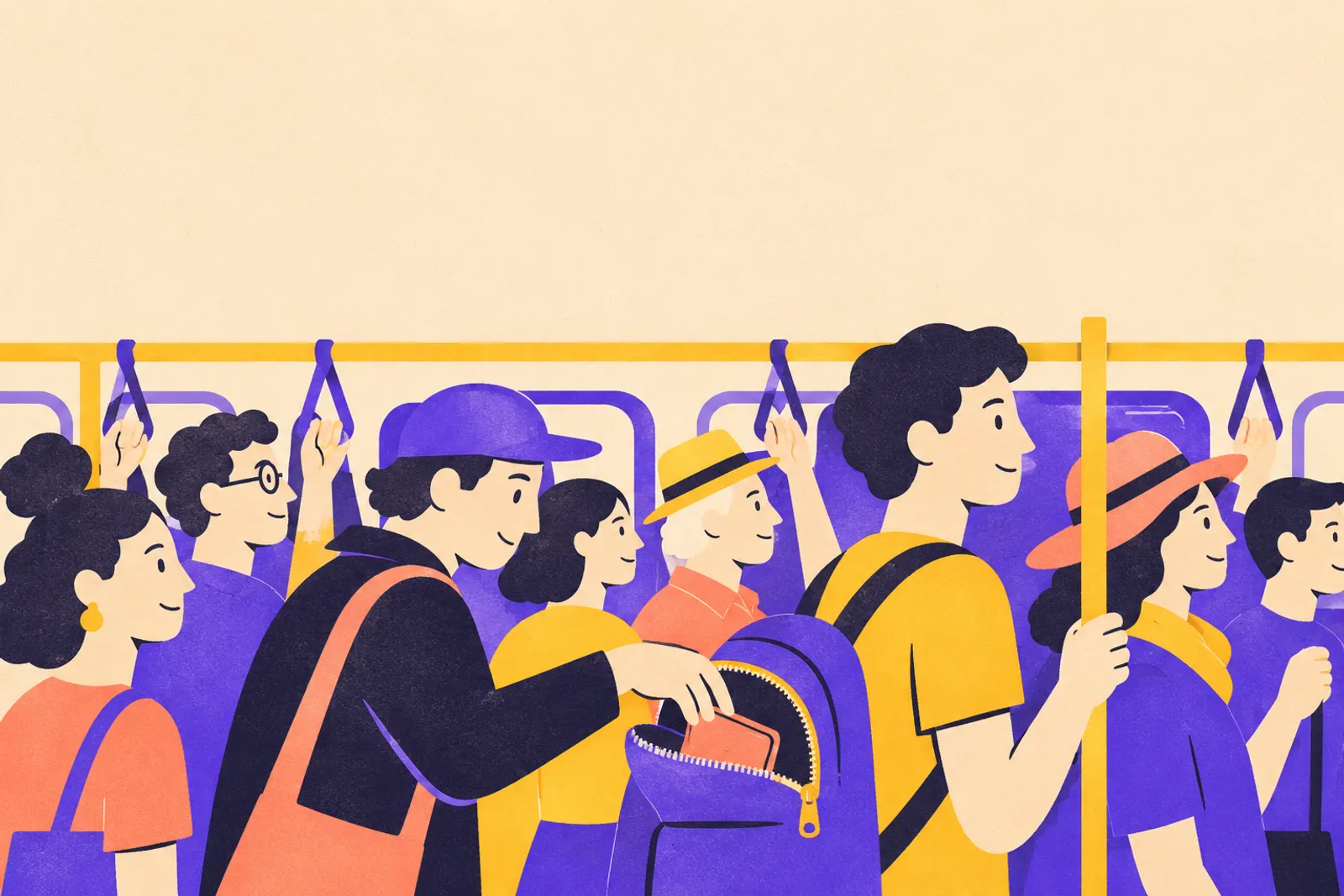
Thieves take money, documents or bags while visitors are distracted or squeezed into crowds. Some blend in by looking and acting like other tourists. Crowded metro carriages in Lisbon are a particular risk.
Warning signs
- People are packed closely around you.
- Your bag is open, behind you or out of sight.
- Your attention is on a queue, shopping or boarding transport.
How to avoid it
- Keep money and documents in an inside pocket or money belt.
- Keep bags closed and in front of you in crowds.
- Watch your luggage and shopping bags throughout the journey.
- Sit near other passengers rather than in an empty carriage.
If it happens to you
Move somewhere safe and report the theft to police. Block any stolen cards. Do not chase or fight the thief.
- Move to a safe, busy place. Do not chase a thief or confront a group.
- Call 112 if anyone is injured, you are being threatened or there is immediate danger.
- Block stolen cards and contact your card issuer about any unauthorised payments.
- Save receipts, messages, transaction details and any photos. Write down what happened while you remember it.
- Report the incident to police. Ask for a report or reference number for insurance or bank follow-up.
- Contact your insurer, rental company or embassy as needed. Ask your embassy or consulate about replacing stolen travel documents.
What travellers report
Posts about this scam on other sites, summarised in our words. Open one to read the original.
- Redditr/LisbonPortugalTravel2026Pickpocketed phoneA traveller reported that their wife’s phone was stolen from her crossbody bag at Lisbon’s crowded Miradouro de Santa Luzia during a family holiday.Read on Reddit
- Redditr/femaletravels2026safety experiences in lisbon and porto?A commenter reported that three thieves opened their backpack and stole a wallet near a Lisbon footbridge.Read on Reddit
- Government adviceSafety and security - Portugal travel advice - GOV.UKUK travel advice warns that thieves use distractions and work in teams on public transport and at crowded bus and tram stops.Read on Government advice
Questions
What is the pickpocketing and bag theft scam in Portugal?
Thieves take money, documents or bags while visitors are distracted or squeezed into crowds. Some blend in by looking and acting like other tourists. Crowded metro carriages in Lisbon are a particular risk.
How can I spot it early?
People are packed closely around you. Your bag is open, behind you or out of sight. Your attention is on a queue, shopping or boarding transport.
How do I avoid pickpocketing and bag theft in Portugal?
Keep money and documents in an inside pocket or money belt. Keep bags closed and in front of you in crowds. Watch your luggage and shopping bags throughout the journey. Sit near other passengers rather than in an empty carriage.
What should I do if it happens to me?
Move somewhere safe and report the theft to police. Block any stolen cards. Do not chase or fight the thief.
Where in Portugal does this happen?
Tourist areas, metro and railway stations, shopping areas, queues and crowded buses or trains.
How common is this scam in Portugal?
Common. Portugal is relatively safe, but pickpocketing is the most common crime against visitors. Other risks include theft from rental cars, street scams in Lisbon, and poor value at some ATMs, exchange counters and music venues.
Are there similar scams in Portugal?
Yes: theft from rental cars, late-night mugging.
Who can I report it to?
PSP — Public Security Police: report theft, robbery or fraud in major urban areas. Approach an officer or visit a police station. GNR — National Republican Guards: report incidents outside major urban centres and in rural areas. Approach an officer or visit a police station. Emergency services: call 112 for urgent police, fire or medical help. Your bank or card issuer: use its official app or contact number to freeze cards and report unauthorised transactions. Your embassy or consulate: use its official contact details if your passport or other travel documents are stolen. Your insurer or rental company: contact them through official channels after a covered loss or theft from a rental car. Keep the police report, receipts and photos.
What number do I call in an emergency in Portugal?
Police, fire and medical emergencies: 112.
 Reviewed by @snuck