
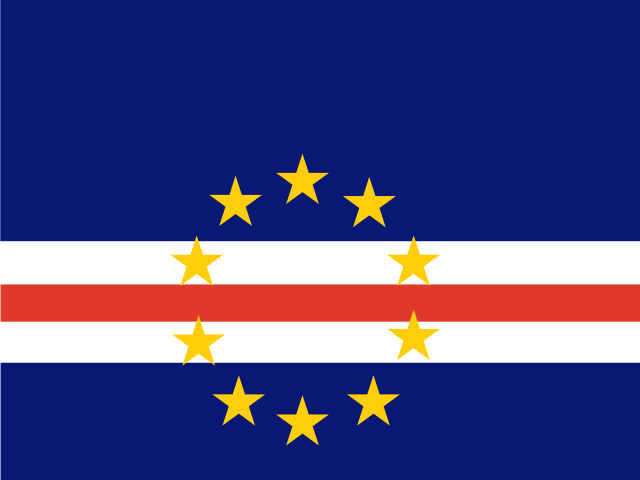
 Western Africa
Cape Verde, officially Cabo Verde, is a country of 10 volcanic islands in the Atlantic Ocean off West Africa. Its capital is Praia. The islands have white-sand beaches, mountains and a mix of African and Portuguese influences.
Why go
White-sand beaches on the windward islands.
Green, mountainous landscapes on the leeward islands.
Historic Cidade Velha, the first European city in the tropics.
Cova Valley, inside an extinct volcano on Santo Antão.
Getting there
By air
- Amílcar Cabral International Airport is on Sal.
- Nelson Mandela International Airport is in Praia on Santiago.
- Aristides Pereira International Airport is on Boa Vista.
By sea
- Ship connections with mainland Africa are infrequent and expensive.
- Yachts crossing the Atlantic commonly visit the islands.
Getting around
Flights between islands
Flights cost more than ferries. They are generally more reliable, take less time and avoid seasickness. As of April 2026, CV Sky runs daily flights between most islands. You can book through its website or local tourist agencies. Book important flights early, as tickets can sell out days or weeks ahead. Demand can rise when ferry services stop. Domestic tickets may cost less when bought in Cape Verde, if you can wait until you arrive. Flights can be delayed, cancelled or moved to the next day. Leave extra time before an international flight and keep your toothbrush with you. For an urgent journey, go to the airport in the morning and ask to join the waiting list. A seat may become available if another passenger does not arrive.
Ferries
Ferries connect the islands and cost less than flights. Timetables can be unreliable, and boats may leave earlier than scheduled. Leave extra time between journeys, especially before an international flight.
Driving
Drive on the right. Main roads are surfaced with asphalt, but some roads are unpaved. The road network is less developed on smaller islands. Road lighting is poor, so take particular care after dark. Traffic can be fast and unpredictable. Drunk driving is common.
Walking and carrying luggage
Many roads and pavements have rough, uneven cobblestones with wide gaps. These surfaces are generally unsuitable for wheeled suitcases, pushchairs and folding bicycles. Small wheels can struggle with stones that stick several centimetres above the ground.
What to see and do
Cidade Velha
Visit the first European city in the tropics. It is a World Heritage Site recognised by the United Nations Educational, Scientific and Cultural Organization.
Cova Valley
This valley on Santo Antão sits inside the crater of an extinct volcano.
Praia
The capital has a town hall, cathedral and Palace of Justice to see.
Island landscapes
The islands range from white-sand beaches to green, mountainous peaks.
Game fishing
Fishing for large fish is available on some islands.
Kitesurfing and windsurfing
These wind-powered water sports are available on some islands.
Food and drink
Fresh seafood
Tuna and wahoo are common. Wahoo is a white-fleshed fish with a texture similar to tuna.
Lagostada
A lobster dish.
Cachupa
The national dish uses maize and potato. Fish or chicken is often added.
Tosta mista
A common toasted ham and cheese sandwich.
European food
European food is common throughout the islands. Italian food is especially popular on Sal.
Vegetarian options
Vegetarians can ask for omelettes or salads.
Money
Cape Verdean escudo (currency code: CVE)
- The escudo is fixed to the euro at 110 escudos per euro.
- Euros are commonly accepted on Sal and Boa Vista. Your change may be in escudos.
- You can exchange major currencies at the international airports on Sal and in Praia, and at banks in larger towns.
- Larger towns have cash machines that accept Visa, MasterCard and Maestro.
Typical costs
- Living costs are moderate to high because most goods are imported.
- Resort costs on Boa Vista and Sal can be similar to those in the Caribbean.
- Santiago is generally the least expensive island.
Language
- Portuguese is the official language and is used in business, schools and official announcements.
- Cape Verdean Creole, also called Kriolu, is the local language. It has nine dialects.
- Many people speak English, especially younger people in towns. English is less widely spoken among older people and in rural areas.
- Learning some Kriolu or Portuguese is useful, and local people appreciate the effort.
Staying safe
- Pickpocketing and bag snatching are common, especially in Praia, Mindelo, Boa Vista and Sal.
- Watch your belongings in crowded markets, festivals and celebrations.
- Avoid travelling alone at night. Violent crime has increased.
- Tourists have also been robbed on beaches.
Local customs
Do
- Be polite and friendly.
- Bargain when shopping.
- Try speaking some Kriolu or Portuguese; people appreciate the effort.
Staying healthy
- Tap water in resorts is usually treated to remove salt and is safe to drink.
- Outside resorts, bottled water is cheap and widely available.
- United Kingdom health authorities classify Cape Verde as having a risk of Zika virus transmission.
- The World Health Organization declared Cape Verde free of malaria in 2024, after more than three years without reported cases.
Phone and internet
- The country has one internet service provider.
Where to stay
- Hotels and guest houses are available throughout the islands.
- Sal has some of the largest hotels, including Riu Funana and Garopa.
- Boa Vista also has large hotels, including Riu Touareg.
Outdoor adventures in Cape Verde
Cape Verde has volcanic landscapes, mountain walks and long sandy beaches. Santo Antão stands out for hiking, Fogo offers an active volcano to explore, and Sal and Boa Vista are known for their beaches.
Pico de Fogo
HikeFogo
Explore the volcanic landscape on foot or horseback.
- Pico de Fogo is an active volcano. Fogo last erupted in 2014.
Santo Antão hiking
HikeSanto Antão
Take the boat from Mindelo's port to Santo Antão for hiking on the island.
Sal beaches
BeacheSal
Stay on Sal and visit its long sandy beaches. The island has many resorts and water sports.
- Robberies against tourists have occurred on beaches.
- Avoid travelling alone at night.
Boa Vista beaches
BeacheBoa Vista
Visit Boa Vista for its beaches.
- Watch your belongings; theft is common on Boa Vista.
- Robberies against tourists have occurred on beaches.
Santo Antão canyoning
More to doSanto Antão
Travel to Santo Antão by boat from Mindelo. Canyoning is available on the island.
Santa Luzia day trip
More to doSanta Luzia
Day tripVisit Santa Luzia as a day trip from São Vicente.
Faja de Agua bay
More to doBrava
Reach Brava by ferry from Fogo, with services a few times a week. Faja de Agua is a remote bay and village on Brava.
Mindelo headland beach walk
BeacheSão Vicentenear Mindelo
20-minute walk north from the port area to the beachWalk north through Mindelo's port area and around the headland to the popular beach in the next bay. Walk or take a bus back to town.
- Watch your belongings; pickpocketing and bag theft are common in Mindelo.
- Avoid travelling alone at night.
Airports, metros and trains in Cape Verde
Airports with scheduled flights
- SIDAmílcar Cabral International AirportEspargosMain international airport
- BVCAristides Pereira International AirportRabilMain international airport
- VXECesaria Evora International AirportSão PedroMain international airport
- RAINelson Mandela International AirportPraiaMain international airport
People and safety in Cape Verde
Religion
Most people are Christian. Mostly one faith.
- Christian89%
- No religion9%
- Muslim2%
- Folk religions2%
LGBT+ travellers
Legal
- Same-sex marriage is not recognised.
- Some laws protect against discrimination.
Women travellers
Ranked #62 of 181 countries for women's safety, inclusion and justice.
58% of women say they feel safe walking alone at night where they live.
Who can visit without a visa
Travellers from 169 of 198 countries can visit Cape Verde easily: no visa, a visa at the airport, or a short online form.
- Visa not required63
- Visa on arrival106
- Visa required29
Who can visit easily, by part of the world
For each part of the world: how many countries' travellers can come easily. Easy means no visa, a visa at the airport, or a short online form.
- Europe45 of 46 countries
- Africa49 of 53 countries
- Americas30 of 35 countries
- Oceania12 of 14 countries
- Asia33 of 50 countries
Questions
Where is Cape Verde?
It is a group of islands in the Atlantic Ocean off the west coast of Africa.
What is the weather like?
The climate is mild, with warm, dry summers. Rainfall is low and peaks in September; Sal, Boa Vista and Maio get almost no rain.
Can a travel agent help me book flights?
Yes. Travel agents may find international connections that booking websites do not show, and local tourist agencies can book domestic flights.
How do I travel between islands?
You can fly or take a ferry. Flights cost more but are generally faster and more reliable; leave extra time because schedules can change.
Can I pay by card?
High-end hotels accept cards, but other hotels may need cash. Expect to use escudos for most other purchases.
Will people speak English?
Many people do, especially younger people in towns. Some Kriolu or Portuguese will help in rural areas and when speaking with older people.
What local food should I try?
Cachupa is the national dish, made with maize and potato, often with fish or chicken. Fresh seafood and lagostada, a lobster dish, are other options.
Is it safe to walk alone at night?
It is best to avoid travelling alone at night. Theft and robbery occur, including in tourist areas and on beaches.
Can I drink tap water?
Tap water in resorts is usually safe to drink. In other areas, bottled water is cheap and widely available.
What electricity supply does Cape Verde use?
The supply is 220 volts at 50 hertz. Europlug and Schuko plugs are used.
 Reviewed by @snuck