
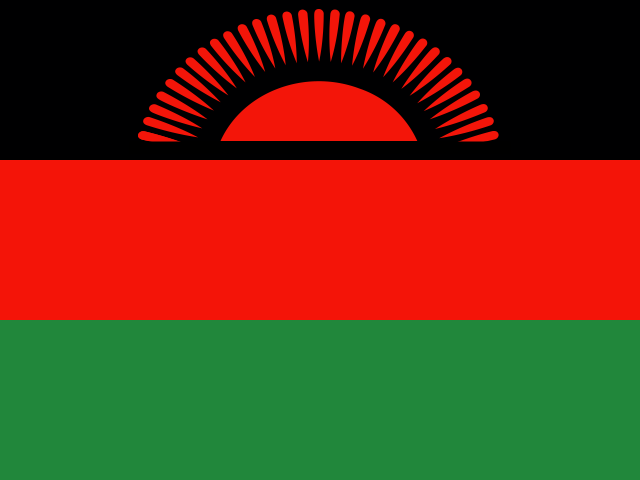
 Eastern Africa
Malawi is a small, landlocked country in Africa. Its eastern border mostly follows Lake Malawi, Africa's third-largest lake. The country is known for its friendly people, mountains, forests and lakeside beaches. Lilongwe is the capital.
Why go
Lake Malawi offers beaches, boat trips and freshwater diving.
Mount Mulanje and Zomba Plateau have mountain scenery and walking routes.
National parks and wildlife reserves offer safaris in varied landscapes.
Nyika Plateau has wide, rolling grasslands.
Village visits, pottery classes and tea factory tours offer cultural experiences.
Best time to go: May to July is dry and cooler. The rainy season usually starts in mid-October or early November and lasts until March.
Getting there
By air
- Malawi has relatively few international flights. Most visitors connect through Johannesburg, Nairobi or Addis Ababa to reach Lilongwe or Blantyre.
By land
- There are no international trains to Malawi.
- The main M1 road links the northern border at Kaporo with Karonga, Mzuzu, Lilongwe and Mchinji. The road from Lilongwe to the Zambian border at Mchinji is described as excellent.
- From Mozambique, take a bus from Tete to Zobwe, cross the border, then take another bus to Blantyre. This busy crossing closes at night, so arrive early.
By sea
- A lake ferry runs twice a week between Likoma Island and Cobué and Metangula in Mozambique.
Customs
- Declare all foreign currency when you arrive.
Getting around
Bus and minibus
Buses and minibuses connect Karonga with other destinations in Malawi. Buses are cheaper than minibuses. AXA Bus Malawi is a bus operator.
Car
Drive on the left. Main roads are generally good, but many other roads remain in poor condition. Avoid driving after dark. Road markings and headlights may be poor, and drunk driving is a serious risk. Wear a seatbelt and keep all arms and legs inside the vehicle. Avoid riding in a pickup's cargo area unless it has the required government documents. Check tyres, headlights and brake lights before setting off. Carry a warning triangle and fire extinguisher. Carry your passport, driving licence and permission to use the vehicle. Expect police checkpoints and allow extra time when travelling to the airport. Fuel shortages can cause long queues with no fuel available. Prepare by buying an extra can of fuel. Watch for children and animals on rural roads. Hitting an animal can lead to demands for payment. Local rental companies include Apex Rent-a-Car Malawi, SS Rent-a-Car and Sputnik Car Hire. Many rental companies elsewhere in Southern Africa do not allow their cars into Malawi, so check permission first.
Lake ferry
The Ilala ferry travels between Monkey Bay and Chilumba. The stated northbound service leaves Monkey Bay on Friday at 10:00 and reaches Chilumba on Sunday at 18:30. The stated southbound service leaves Chilumba on Monday at 02:00 and reaches Monkey Bay on Wednesday at 14:00.
Train
Passenger trains are very limited, with about one or two departures a week between Blantyre and smaller southern cities. No passenger trains serve Lilongwe. All trains are operated by CEAR.
What to see and do
Lake Malawi
This vast lake fills part of the Rift Valley and forms much of Malawi's eastern border.
Mulanje Massif
A large mountain wilderness rises above the Phalombe Plains. Its highest peak, Sapitwa, reaches about 3,000 metres.
Zomba Plateau
This high plateau has impressive scenery and a gently rolling top that is accessible by road.
Nyika National Park
Much of the high Nyika Plateau is protected here. Its rolling grasslands are a distinctive northern landscape.
Nkhotakota Wildlife Reserve
This protected wilderness has rugged scenery and dramatic slopes between the Rift Valley and the Central African Plateau.
Elephant Marsh
This important wetland lies in the Lower Shire Valley in southern Malawi.
Food and drink
Nsima or sima
A thick maize porridge and the main local staple. Roll it into balls with your right hand and dip it into stews or side dishes called relishes.
Relishes
Common accompaniments include beef, chicken, fish, beans, vegetables and pumpkin leaves called chibwabwa.
Usipa
Tiny dried fish often eaten with nsima.
City restaurants
Lilongwe, Mzuzu and Blantyre have a good choice of food, including burgers, pizza, fried chicken and international meals. Many restaurants do not serve pork.
Roadside tuck shops
Small shops along major roads sell packaged biscuits and takeaway food such as meat pies and sausage rolls. Food choices are more limited outside the larger cities.
Money
Malawian kwacha (MWK), also written as MK.
- Kwacha is difficult to exchange outside Malawi. It can be exchanged for Zambian kwacha at the border.
- The source states that, from late 2025, foreign visitors must pay for accommodation and related tourist services in US dollars, euros or British pounds.
- Foreign currency is widely accepted, especially for larger purchases. Larger notes are often preferred and may receive better exchange rates.
- Larger hotels and large supermarkets accept Visa and Mastercard.
Typical costs
- Local restaurants are quoted as serving nsima with relish for less than MK600. This price may be out of date.
- Backpacker hostel dorm beds are quoted from US$10 per person.
- During shortages, black-market fuel may cost almost two or three times the usual price.
- Some rural five-star resorts charge prices similar to those in Western countries.
Language
- English is the only official language and is widely spoken in cities and among well-educated people.
- Chichewa and Chitumbuka are widely spoken regional languages. A few words can help outside cities.
- Chitumbuka is common in the north and parts of central Malawi.
- Chiyao is spoken by Yao people, mostly in Mangochi District.
- Some remote areas use other local languages. Many younger people speak several languages.
Staying safe
- Muggings and robberies occur in larger cities, especially Lilongwe, and in some places on tourist routes. Avoid walking alone at night and plan how you will get home.
- Carjackings sometimes happen. Keep doors locked and windows shut during evening journeys, although driving at night is discouraged.
- Road travel is a major risk because of poor vehicles, inexperienced drivers and drunk driving. Taxi drivers may also be drunk at night.
- Pickpockets operate in bars and nightclubs. Carry little cash and leave cameras and other valuables behind.
Local customs
Do
- Say hello and ask how someone is before asking a question. Greetings are an important part of being polite.
- Speak softly, show respect and be ready to shake hands.
- Accept local hospitality and expect curious questions, especially in rural areas.
- Learn a few greetings in Chichewa or Chitumbuka. Local people appreciate the effort.
- Dress modestly outside your lodge or camp. Wraps are sold in shops and markets in major cities.
Don't
- Do not skip greetings and immediately get to your request. This can seem rude.
- Women should avoid shorts, mini-skirts and low-cut tops, especially outside lodges and camps.
- Men should be aware that shorts are mostly associated with schoolchildren. Men in cities generally wear trousers.
- Do not assume men holding hands are a couple. This can be a normal sign of friendship.
Staying healthy
- Malaria is a health risk in Malawi.
- Lake Malawi carries a risk of bilharzia, especially around Cape Maclear. Symptoms can take months to appear; the source mentions treatment from local pharmacists before leaving Malawi.
- Avoid unprotected sex and injecting drugs because of the risk of HIV, the human immunodeficiency virus.
- Tap water in Lilongwe, Blantyre, Zomba and Mzuzu is generally safe, but ask your accommodation first. Travellers with sensitive stomachs should avoid it; bottled water is widely sold in major shops.
Where to stay
- Hotels with Western-style facilities are available in Blantyre, Lilongwe, Zomba and Mzuzu, and along Lake Malawi.
- Lake Malawi resort hotels mainly serve international tourists.
- Backpacker hostels are found in many places, with dorm beds quoted from US$10 per person.
- Some rural areas have five-star resorts charging prices similar to those in Western countries.
Outdoor adventures in Malawi
Malawi offers mountain treks, wildlife trips and beaches beside Lake Malawi. Climb Mount Mulanje, explore Zomba Plateau or go freshwater diving at Nkhata Bay. May to July is dry; the rainy season usually starts in mid-October or early November and lasts until March.
Mount Mulanje and Sapitwa Peak
TrekSouthern Malawi
Trek on Mount Mulanje, within Mulanje Mountain Forest Reserve. Climbers can aim for Sapitwa, its highest peak.
Liwonde National Park and Shire River boat trip
SafariSouthern Malawinear Liwonde
30 minutes for the boat rideApproach the park from Liwonde town. Take a boat ride upstream on the Shire River to watch wildlife.
- Hippos can attack people and capsize small boats.
- Swimming can be dangerous because of crocodiles and hippos.
Cape Maclear beaches
BeacheSouthern Lake Malawi
Visit Cape Maclear, a fishing village on a peninsula in southern Lake Malawi, to relax on its sandy beaches.
- The area has a high risk of bilharzia, also called schistosomiasis, an infection linked to freshwater.
- Swimming in Malawi's water bodies can be dangerous because of crocodiles and hippos.
Nkhata Bay freshwater diving
Scuba divingNorthern Lake Malawinear Nkhata Bay
Head to Nkhata Bay for freshwater diving in Lake Malawi. Lodges provide places to stay around the bay.
- Lake Malawi carries a risk of bilharzia, an infection linked to freshwater.
Zomba Plateau
HikeSouthern Malawi
Climb Zomba Plateau on foot, or drive up to reach the plateau top.
Nyika National Park
WildlifeNorthern Malawi
Visit Nyika National Park to explore its rolling grassland plateau and watch wildlife.
Kuti Community Wildlife Park
Wildlifenear Lilongwe
Travel along Salima Road from Lilongwe. The park is about 90 km from the city.
Horseback riding in Kande
More to do
Go to Kande for horseback riding.
Horseback riding in Nyika
More to doNorthern Malawi
Visit Nyika for horseback riding on its highland plateau.
Boat journey to Likoma and Chizumulu Islands
More to doLake Malawi
Reach the islands by private boat or public ferry. The ferry runs only once or twice a week. For ferry travel to or from Nkhata Bay, choose a deck or cabin ticket.
Airports, metros and trains in Malawi
Airports with scheduled flights
- BLZChileka International AirportBlantyreMain international airport
- LLWKamuzu International AirportLumbadziMain international airport
Trains
- Rail network
- 797 km
People and safety in Malawi
Religion
Most people are Christian. Mixed.
- Christian77%
- Muslim14%
- Other6%
- No religion2%
- Folk religions1%
LGBT+ travellers
Same-sex relationships are illegal
- The law allows up to 14 years in prison.
- Some laws protect against discrimination.
Check your own government's travel advice before you go, and be careful with public displays of affection and dating apps.
Women travellers
Ranked #150 of 181 countries for women's safety, inclusion and justice.
46% of women say they feel safe walking alone at night where they live.
Who can visit without a visa
Travellers from 148 of 198 countries can visit Malawi easily: no visa, a visa at the airport, or a short online form.
- Visa not required47
- Visa on arrival101
- eVisa47
- Visa required3
Who can visit easily, by part of the world
For each part of the world: how many countries' travellers can come easily. Easy means no visa, a visa at the airport, or a short online form.
- Oceania14 of 14 countries
- Americas32 of 35 countries
- Europe42 of 46 countries
- Asia32 of 50 countries
- Africa28 of 53 countries
Questions
When is the dry season?
May to July is dry and cooler. Rain usually begins in mid-October or early November and continues until March.
How do most international visitors fly to Malawi?
Most connect through Johannesburg, Nairobi or Addis Ababa, then fly into Lilongwe or Blantyre.
Can I pay by card?
Larger hotels and large supermarkets accept Visa and Mastercard. Many cash machines at Standard Bank, Ecobank and National Bank of Malawi accept these cards too.
Will I be able to use English?
English is the official language and is widely spoken in cities. A few words of Chichewa or Chitumbuka help outside urban areas.
What local food should I expect?
Nsima is a thick maize porridge served with relishes such as meat, fish, beans or vegetables. It is traditionally eaten with the right hand.
Is it safe to travel by road at night?
Night road travel is discouraged because of poor markings, faulty headlights, pedestrians and drunk drivers. Some taxi drivers may also be drunk.
Can I swim in Lake Malawi?
The lake carries a risk of bilharzia, especially around Cape Maclear. Crocodiles and hippos can also make swimming dangerous.
Are there budget places to stay?
Backpacker hostels are available in many places. The source quotes dorm beds from US$10 per person.
How should I dress?
Dress modestly, especially outside lodges and camps. Women should avoid shorts and mini-skirts, while men in cities generally wear trousers.
Can I drink the tap water?
Tap water in major cities is generally safe, but ask your accommodation first. Travellers with sensitive stomachs should avoid it, and bottled water is widely available in major shops.
 Reviewed by @snuck