
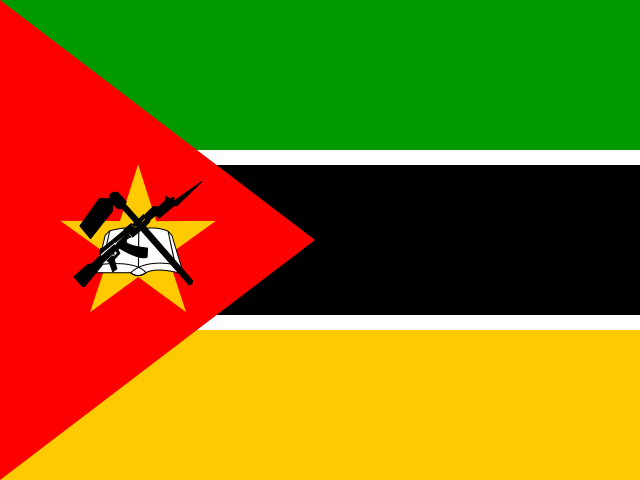
 Eastern Africa
Mozambique is on the Indian Ocean coast of Southern Africa. It has long beaches, historic buildings, African art and music, and seafood.
Why go
Explore the historic buildings and beaches of Mozambique Island.
Visit the historic town of Inhambane.
See wildlife and nature in Gorongosa National Park.
Enjoy diving, fishing, sailing and beaches along more than 1,000 km of coast.
Getting there
By air
- Most international flights arrive from South Africa. The source also lists direct routes from Zimbabwe, Tanzania, Kenya, Portugal, Qatar, Istanbul and Addis Ababa.
- Johannesburg has several daily flights to Maputo. Flights also connect Johannesburg, Dar es Salaam and Nairobi with Pemba.
- If you book by telephone with Linhas Aereas de Moçambique and pay at check-in, reconfirm 72 hours before departure. Otherwise, the airline may cancel your booking.
By land
- To enter with a car, bring its original registration documents. If someone else owns it, bring their written permission to take it into Mozambique.
- Foreign vehicles need third-party insurance and must pay road tax. The source lists insurance at many borders for 150 South African rand and road tax of 26.50 meticais.
- Railways mainly carry goods and are in poor condition. Lines connect Nampula with Cuamba, Maputo with Chicualacuala, and Maputo with the South African border.
By sea
- There is no scheduled sea travel to or from Mozambique.
Getting around
Driving
Drive on the left. Roads and vehicles can be in poor condition, and drivers may ignore traffic rules. Avoid driving outside cities after dark. Driving under the influence of alcohol or drugs is common, especially at night and on weekends. Keep windows closed and doors locked, especially at junctions. Do not pick up strangers. Fuel stations are scarce north of Vilankulo, with gaps of up to 150 km. Fill up whenever you can. The EN1 runs much of the country's length near the coast. Some sections are badly damaged and difficult for cars with little space beneath them. Bushlore rents four-wheel-drive vehicles and campers. It also helps arrange trips across borders.
Train
Passenger rail options are limited, and the railway system is mainly used for goods. Routes include Nampula to Cuamba and Maputo to border towns.
Chapa
Chapa drivers may have change when shops and lodgings do not. The source gives an example of paying a 15-metical fare with a 100-metical note.
What to see and do
Mozambique Island
See colonial buildings and beaches at this World Heritage Site.
Inhambane
Explore a historic town.
Museum of Revolution, Maputo
Learn about the country's recent history.
Gorongosa National Park
See wildlife and natural landscapes.
Diving
Mozambique's Indian Ocean coast attracts scuba divers.
Tours and safaris
Tour operators can help you reach the country's main sights. The source names Mozaic Travel and Dana Tours in the south, and Kaskazini in the north.
Food and drink
Piri-piri
A very hot bird's-eye chilli, commonly served as a sauce.
Pãozinho
A floury Portuguese-style bread roll that can be slightly sweet. Meat fillings include beef and fried pork.
Matapa
A stew made with cassava leaves and seafood such as clams, crab or prawns. It is usually served over rice.
Camarão National
Mozambican prawns marinated in piri-piri, garlic, onion, lemon and vinegar.
Crayfish and other seafood
Often prepared with a piri-piri marinade and served with rice and matapa.
Kakana
A bitter local vegetable.
Money
Mozambican metical, plural meticais; currency code MZN and symbol MT.
- You cannot buy or exchange meticais outside Mozambique. Change leftover money before leaving.
- Banks and exchange offices accept US dollars, South African rand, British pounds and euros. The source says Canadian dollars, Australian dollars and Japanese yen are not accepted.
- Businesses in tourist areas may quote prices in South African rand. Paying in foreign currency can mean a poor exchange rate.
- Cash machines are available across the country, but failures happen. Withdrawal limits vary by bank.
Typical costs
- The source lists a malaria test at about 50 meticais and treatment at another 50 meticais.
- Bottled water can cost 50–60 meticais at some backpacker lodgings and restaurants.
- The source gives a chapa fare example of 15 meticais.
Language
- Portuguese is the official language.
- English is spoken in Maputo and tourist areas, but becomes less common farther north.
- In rural areas, even Portuguese may be limited.
- Swahili is useful in the far north, especially near the Tanzanian coast.
- Nyanja is spoken near Malawi and Zambia.
- Some Shona words may help near Cabora Bassa.
Staying safe
- The source warns against all travel to Cabo Delgado Province and north-eastern Nampula Province because of militant attacks and terrorism.
- The source warns against travel on the EN6 between Beira and Chimolo because of armed attacks on vehicles.
- It also warns against travel on the EN1 between Caia and Gorongosa, and between the Save River and Muxungue.
- Muggings, robbery and serious violent crime occur. Ask local hostels and other travellers which areas are dangerous.
Local customs
Do
- Bargain calmly when an item has no displayed price.
- Ask your hotel for help judging a fair price.
Don't
- Do not become angry or hostile when bargaining.
Staying healthy
- See a doctor before travel about medicine to prevent malaria. The source says protection is essential throughout Mozambique.
- If you suspect malaria, seek a test at a clinic. The source says clinics in every town offer testing.
- Arrange vaccinations before arriving. If visiting remote areas, consider carrying sterile medical supplies because local facilities may lack them.
- Avoid food from places where hygiene looks poor.
Where to stay
- Inexpensive guesthouses are available.
- Backpacker accommodation is available.
- Resorts include some of the most expensive accommodation in the region.
Outdoor adventures in Mozambique
Mozambique has Indian Ocean beaches, island groups and diving areas, plus wildlife in Gorongosa National Park. Coastal weather is warm and tropical, while mountain areas stay cooler throughout the year.
Bazaruto Archipelago diving
Scuba divingSouthern Mozambiquenear Vilanculos
Use Vilanculos, also called Vilankulo, as your gateway to the islands.
Tofo Beach diving
Scuba divingSouthern Mozambiquenear Inhambane
Head to Tofo Beach on the coast east of Inhambane.
- Women should never walk alone on beaches.
Ponta d'Ouro diving
Scuba diving
Ponta d'Ouro is more easily reached from South Africa than from Maputo.
Gorongosa National Park wildlife watching
Wildlife
Use a tour or safari operator to help arrange your visit.
- Avoid the EN1 between Caia and Gorongosa because of armed attacks on vehicles.
- Also avoid the EN6 between Beira and Chimolo, and the EN1 between the Save River and Muxungue.
Quirimbas Archipelago and National Park
BeacheNorthern Mozambiquenear Pemba
The archipelago is accessible through Pemba. Take account of the northern travel warnings before planning a visit.
- Avoid all travel to Cabo Delgado Province and north-eastern Nampula Province because of armed groups and terrorism.
- Women should never walk alone on beaches.
Ilha de Mozambique beaches
Beache
Visit the beaches on Ilha de Mozambique, also called Mozambique Island.
- Women should never walk alone on beaches.
- Ask local hostels and other travellers which areas are dangerous.
Airports, metros and trains in Mozambique
Airports with scheduled flights
- BEWBeira International AirportBeiraMain international airport
- MPMMaputo AirportMaputoMain international airport
- APLNampula AirportNampulaMain international airport
- TETTete AirportTeteMain international airport
Trains
- Rail network
- 3,249 km
People and safety in Mozambique
Religion
Most people are Christian. Mixed.
- Christian69%
- Muslim21%
- No religion8%
- Folk religions2%
LGBT+ travellers
Legal
- Same-sex marriage is not recognised.
- Some laws protect against discrimination.
Women travellers
Ranked #151 of 181 countries for women's safety, inclusion and justice.
45% of women say they feel safe walking alone at night where they live.
Who can visit without a visa
Travellers from 189 of 198 countries can visit Mozambique easily: no visa, a visa at the airport, or a short online form.
- Visa not required29
- Visa on arrival147
- eTA required13
- eVisa6
- Visa required3
Who can visit easily, by part of the world
For each part of the world: how many countries' travellers can come easily. Easy means no visa, a visa at the airport, or a short online form.
- Americas35 of 35 countries
- Oceania14 of 14 countries
- Europe45 of 46 countries
- Africa50 of 53 countries
- Asia45 of 50 countries
Questions
What language will I need?
Portuguese is the official language. English is more common in Maputo and tourist areas, but less common farther north and in rural areas.
What money should I carry?
Use Mozambican meticais and carry small notes. Change can be hard to find, especially for 500- and 1,000-metical notes.
Can I drink tap water?
Assume it is unsafe and avoid ice. Use bottled or treated water.
Is it safe to drive at night?
Driving outside cities after dark is not recommended. Roads can be poor, and driving under the influence of alcohol or drugs is common.
Which areas does the source warn against visiting?
It warns against Cabo Delgado and north-eastern Nampula, plus parts of the EN1 and EN6 listed in the safety advice.
Do I need malaria protection?
The source says malaria prevention medicine is essential throughout the country. See a doctor before travelling.
What local food can I try?
Try matapa, prawns, Portuguese-style bread rolls and seafood with piri-piri sauce. Piri-piri is very hot.
What accommodation is available?
Choices range from inexpensive guesthouses and backpacker lodgings to costly resorts.
What is the weather like?
Most of Mozambique has a tropical climate, with hot, humid summers. Mountain areas stay cooler throughout the year.
Which number should I call in an emergency?
Call 119 for police, 117 for the fire department or 198 for emergency medical services.
 Reviewed by @snuck