
Western Africa
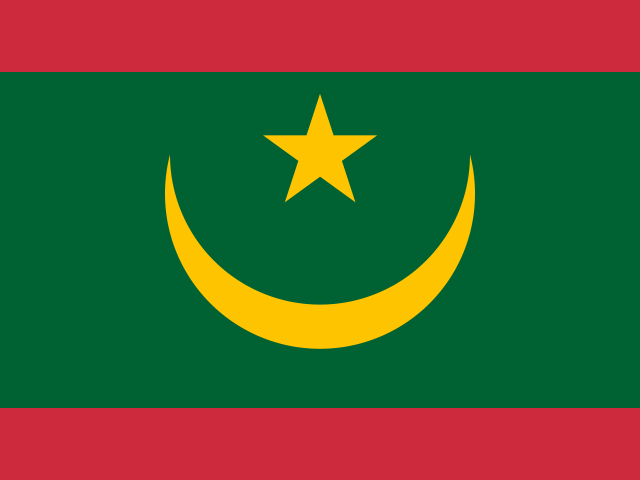 Western Africa
MauritaniaTravel guide
- Nouakchott
- Chinguetti
- Nouadhibou
Mauritania is a country of desert and ocean, with Nouakchott as its capital. Visitors come for Sahara scenery, historic towns and coastal birdlife, but extremist groups and kidnapping pose serious risks in some areas.
Why go
Explore the dunes, rocky desert and hidden oases of Adrar.
See the historic towns of Chinguetti and Ouadane.
Watch migrating birds in Banc d'Arguin National Park.
Visit Oualata for decorated buildings and ancient manuscripts.
Allow plenty of time if travelling far into the interior.
Getting there
By air
- Nouakchott–Oumtounsy International Airport has the airport code NKC. It receives flights from several African cities, Paris, Istanbul and Gran Canaria.
- Nouadhibou International Airport has the airport code NDB. Mauritania Airlines flies there from Gran Canaria.
- Winter charter flights connect France with Atar.
By land
- Road borders connect Mauritania with Western Sahara, Mali and Senegal. The source describes the Western Sahara and Mali crossings as extremely dangerous.
- The route from Western Sahara enters near Nouadhibou. Stay strictly on the worn tracks between border posts because of mines; the danger continues until after the railway line.
- From Senegal, shared taxis run from Dakar and St Louis to Rosso, where a ferry crosses the Senegal River. More shared taxis continue to Nouakchott.
Customs
- Alcohol imports are limited to 0.5 litres, which must be declared.
- You are not allowed to take Mauritanian ouguiyas out of the country.
Getting around
Buses and shared taxis
Buses and shared taxis connect Nouakchott with places including Atar, Chinguetti, Nouadhibou, Rosso, Kiffa and Zouerat. Ask several drivers about the usual fare before choosing a shared taxi. Very cheap offers may come from illegal taxis and can be dangerous. Carry plenty of passport copies for police checkpoints. You may hand over 5–10 copies in a day.
Train
The Iron Ore Train links Nouadhibou, Choum and Zouerat. The full journey takes about 20 hours. The train can be overcrowded, very hot and uncomfortable, and people fall from it. It is not advised for travellers unused to difficult conditions. Departure from Nouadhibou is around 15:00 daily, reaching Choum around 02:00 the next morning. Check departure times when you arrive. The passenger carriage requires a ticket, and limited accommodation with bunk beds is also available. Second class cost UM 300 in 2025. Railway authorities announced a ban on foreign tourists riding in ore hoppers in 2024, although enforcement was inconsistent. Carry a scarf to protect your face from dust. Shared taxis or minibuses often meet the train at Choum for Atar. The trip usually takes about two hours, but breakdowns can cause long delays.
Road and desert travel
Travel between cities by day, in groups and on major routes. Check which regions are closed before planning a route. Military restrictions can sometimes include Chinguetti or Ouadane. Guides and tourist agencies are fairly easy to find. Allow extra time for travel away from the main routes.
What to see and do
Adrar
See dunes, rocky landscapes, narrow canyons and hidden oases. The area also has rock paintings and the remains of the Almoravid capital, Azoughui.
Chinguetti
This former trading and Islamic learning centre has architecture largely unchanged for nearly a thousand years. It is part of a World Heritage Site.
Ouadane
This historic desert town is part of a World Heritage Site.
Banc d'Arguin National Park
Coastal dunes meet the sea in this protected area. Millions of migrating birds visit each year.
Oualata
This former trading town has colourful buildings with detailed geometric decoration. Its manuscript museum holds ancient scrolls with fine handwriting.
Aioun
The interior around Aioun has striking rock formations.
Food and drink
Chebujin
Fish and rice commonly found in the south.
Rice with meat or couscous
Common local meals in the north.
Mechui
Grilled sheep, usually more expensive than basic local meals.
Nouakchott restaurants
Pizza Lina, Café Liban and Le Petit Café are listed options. Menus commonly include pizza, burgers, sandwiches and salads.
Sahara Café
A Nouakchott option for pizza, sandwiches and Lebanese dishes.
Prince sandwich shop
A sandwich shop near Marché Capitale that taxi drivers know by name.
Money
Mauritanian ouguiya, written as UM; its currency code is MRU.
- Some prices still use the old currency system. Ten old ouguiyas equal one new ouguiya, so check which system a price uses.
- Some cash machines in Nouakchott and Nouadhibou accept international Visa cards. Societe Generale machines also accept international MasterCard cards.
- Do not depend entirely on cash machines, especially outside the main cities. Machines may have no cash.
- Euros, US dollars and CFA francs are easy to exchange in Nouakchott.
Typical costs
- Restaurant dishes in Nouakchott: UM 100–250.
- Meals in small local restaurants: UM 20–50.
- A family-prepared meal: no more than UM 150, according to the source.
- Bottled water: UM 20.
- Beds or mattresses at guesthouses and campsites in Adrar and Nouadhibou: from UM 150.
- Hand-dyed fabric: UM 150–800.
- Internet cafés in Nouakchott and Nouadhibou: UM 200–300 per hour.
- Beer in the capital: up to US$6.
Language
- Arabic is the official language; Hassaniya Arabic is the everyday local variety.
- French is widely used in business, government and daily communication.
- English is not widely spoken, although speakers are easier to find in Nouakchott.
- Pulaar, Wolof and Soninke are spoken in the south.
- Salaam alaykum
- A greeting to use when meeting people.
Staying safe
- Some governments advise against travel to the eastern and northern desert regions because of extremist groups. Kidnapping is a particular risk in remote northern and eastern areas.
- Check your embassy or consulate's travel advice and military access restrictions before planning your route.
- The area near Western Sahara is heavily mined. Stay on established tracks at the border and do not assume the paved road is mine-free before the railway line.
- Areas near Algeria and Mali are known for banditry. The road from Morocco has also been the site of kidnappings.
Local customs
Do
- Greet people with Salaam alaykum.
- Eat with your right hand, especially when no cutlery is provided.
- Dress modestly and cover your arms. Long skirts are suggested for women; covering your head is polite but not required.
- Follow the other person's lead when greeting someone of the opposite sex. A greeting with your hand over your heart is an option.
- If offered tea in a home, stay for at least the second glass. The full three-glass serving takes about an hour.
Don't
- Avoid eating, drinking or smoking in public during daylight in Ramadan. Most restaurants close until dusk.
- Do not initiate a handshake with someone of the opposite sex.
- Avoid public touching with a travelling companion of the opposite sex.
- Avoid prolonged direct staring, which some people may read as a sexual invitation or an aggressive act.
- Slavery remains a sensitive social issue. The source advises tourists against becoming involved.
Staying healthy
- Drink bottled water unless you can purify or filter local water. This advice also applies in Nouakchott.
- The dry desert climate can cause dehydration before you notice it. In the hottest weather, you may need several litres of water each day.
- Malaria is present in the south. Always use a mosquito net there.
- Mosquitoes occur throughout the year in the south, though they are less common from December to May. They are less common in the dry northern desert.
Phone and internet
- Mattel, Mauritel Mobiles and Chinguitel offer prepaid mobile plans.
- Third- and fourth-generation mobile data services are available, with good speeds.
- Desert trips may go beyond mobile coverage. Satellite phones are available from Thuraya, Iridium and Inmarsat, and equipment can be rented.
- Internet cafés in Nouakchott and Nouadhibou offer fixed-line connections for UM 200–300 per hour.
Where to stay
- Accommodation covers several price levels. The highest class hotels are found only in Nouakchott and Atar.
- Guesthouses, called auberges, and campsites in Adrar and Nouadhibou rent beds or mattresses from UM 150.
- Regional capitals usually have at least one hotel. Prices can be high for the standard offered.
- A stay with a local family may involve sleeping on a foam mat on the ground, being near animals and using a latrine.
Outdoor adventures in Mauritania
Mauritania offers Sahara dunes, rocky desert trips and an Atlantic coast rich in birdlife. Highlights include the Adrar desert, walks around Chinguetti and wildlife watching in Banc d’Arguin National Park. Extremist groups pose a danger, and some northern and eastern areas may be closed to visitors.
Birdwatching in Banc d’Arguin National Park
WildlifeCentral Atlantic coast
Visit the coastal national park, where desert dunes meet the sea. Transport and tour arrangements are not specified.
Adrar desert 4x4 exploration
More to doAdrarnear Atar
Explore by four-wheel-drive vehicle away from marked roads, crossing rocky ground and narrow canyons to reach hidden oases. Guides and tourist agencies are available.
- Permit: Some northern areas may be closed to tourists. Check which regions are open before planning.
- Some governments advise against travel to northern desert regions because of extremist groups.
- Kidnapping is a risk in remote northern and eastern areas.
Chinguetti dune walks
HikeAdrarnear Chinguetti
Hire a guide and a camel to carry your belongings while you walk through the desert. Walking independently and hiring a four-wheel-drive vehicle are also described options.
- Permit: Chinguetti is sometimes included in areas closed to tourists. Check access before planning.
- Northern desert travel carries a danger from extremist groups and kidnapping.
- Check government travel advice and local closures before setting out.
Dolphin-assisted fishing spectacle at Nouamgar
WildlifeBanc d’Arguin coastnear Nouamgar
Visit Nouamgar to watch local fishers working with dolphins to gather fish in shallow water. Viewing arrangements are not specified.
Nouakchott beaches
BeacheCoastal Mauritanianear Nouakchott
Weekend evenings, especially during the hot seasonHead about 5 km west of central Nouakchott to reach the beaches, fishing wharf and seaside hotels.
- Swimming can be dangerous because of strong, treacherous currents.
Monk seal watching at the peninsula’s southern tip
WildlifeNouadhibou peninsulanear Nouadhibou
Visit the small national park at the southernmost tip of the peninsula to watch monk seals where the bay meets the Atlantic.
- Keep a safe distance from the seals. Some have behaved aggressively.
Kiteboarding on Nouadhibou Bay
More to doNouadhibou Baynear Nouadhibou
Virtually year-roundBring your own kiteboard to use the bay’s steady, brisk winds. Online weather services provide daily wind and tide information.
Birdwatching at Nouadhibou’s salt marsh estuary
WildlifeNouadhibou Baynear Nouadhibou
Head towards the Centre de Pêche. The salt marsh estuary is on the left beside the bay.
- There is sometimes a police checkpoint at a green shipping container on the way.
Fishing on Nouadhibou Bay
More to doNouadhibou Baynear Nouadhibou
Higher tides give better resultsFish from the pier at the Centre de Pêche, or arrange a fishing boat through the hotel there. Fishing equipment can also be rented.
Picnic island boat trip on Nouadhibou Bay
BeacheNouadhibou Baynear Nouadhibou
Arrange a boat through the hotel at the Centre de Pêche. Boats ferry small groups to a picnic island on the far side of the bay.
- The sun is often intense. A small cabin provides shelter.
Beach fishing near Nouakchott
More to doCoastal Mauritanianear Nouakchott
Bring your own equipment to cast a fishing line from the beaches near Nouakchott. Some basic supplies are sold in Lebanese-owned shops in the city.
- Travel in groups for security.
- Strong sea currents make swimming dangerous.
Fishing at Cap Blanc
More to doSouthern tip of the Nouadhibou peninsulanear Nouadhibou
Take your own fishing equipment and a four-wheel-drive vehicle to fishing spots to the right of the SNIM port and refinery facilities. Go with a local friend.
- The area is remote and may have security checkpoints.
- The fishing spots are extremely close to the Moroccan border.
Airports, metros and trains in Mauritania
Airports with scheduled flights
- NDBNouadhibou International AirportNouadhibouMain international airport
- NKCNouakchott–Oumtounsy International AirportNouakchottMain international airport
Trains
- Rail network
- 728 km
People and safety in Mauritania
Religion
Most people are Muslim. Mostly one faith.
- Muslim100%
LGBT+ travellers
Illegal, with the death penalty in law
- The law allows death penalty.
Check your own government's travel advice before you go, and be careful with public displays of affection and dating apps.
Women travellers
Ranked #166 of 181 countries for women's safety, inclusion and justice.
60% of women say they feel safe walking alone at night where they live.
Who can visit without a visa
Travellers from 16 of 198 countries can visit Mauritania easily: no visa, a visa at the airport, or a short online form.
- Visa not required9
- Visa on arrival7
- eVisa181
- Visa required1
Who can visit easily, by part of the world
For each part of the world: how many countries' travellers can come easily. Easy means no visa, a visa at the airport, or a short online form.
- Africa12 of 53 countries
- Americas3 of 35 countries
- Asia1 of 50 countries
- Europe0 of 46 countries
- Oceania0 of 14 countries
Questions
Is Mauritania safe for a first visit?
Extremist groups, kidnapping, mines and banditry create serious risks in some regions. Check embassy travel advice and regional closures before planning a trip.
Can I manage with English?
English is not widely spoken, though you are more likely to find speakers in Nouakchott. Arabic and French are much more widely used.
Can I rely on cash machines?
Some machines in Nouakchott and Nouadhibou accept international cards, but cash may run out. Do not rely entirely on them, especially elsewhere.
Is tap water safe to drink?
Use bottled water unless you have a suitable water purification or filtration system. This applies throughout the country, including Nouakchott.
What is the weather like?
Much of Mauritania is desert, with large differences between day and night temperatures. Most rain falls from July to September, and dry, dusty winds are common.
What clothes should I bring?
Choose modest clothes that cover your arms and much of your skin. Long skirts are suggested for women, and a head covering is polite but optional.
Is the Iron Ore Train suitable for inexperienced travellers?
The source advises against it for people unused to difficult travel. It can be overcrowded, extremely hot and uncomfortable, and falls occur.
What food is available outside the capital?
Fish and rice are common in the south, while rice with meat and couscous are common in the north. Small shops also sell bread, biscuits, cakes and drinks.
Will my phone work in the desert?
Some desert areas have no mobile coverage. Satellite phones are available to rent for trips beyond the network.
What changes during Ramadan?
Most restaurants close until dusk, and working hours are shorter. Visitors who are not Muslim should still avoid eating or drinking in public during daylight.
 Reviewed by @snuck