
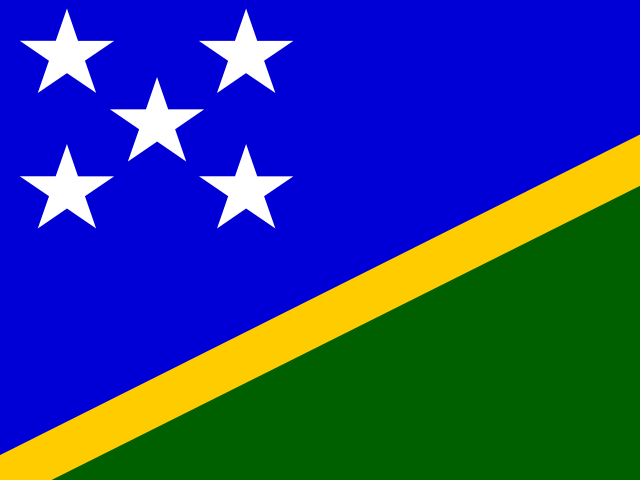
 Melanesia
The Solomon Islands are a group of islands in the South Pacific, east of Papua New Guinea. They have six major islands and over 900 smaller islands, with beaches, rainforests, lagoons, waterfalls and colourful cultural traditions.
Why go
Sandy beaches, lagoons and rainforest scenery.
Diving with rich underwater life and wartime wrecks.
Traditional handicrafts, canoes and artificial islands.
Waterfalls, hot springs and volcano hikes.
Best time to go: June to August is cooler. It is very humid all year, while November to April brings more rain and occasional sudden storms or cyclones.
Getting there
By air
- Honiara International Airport (HIR) is 11 km east of Honiara, the capital.
- Flights from Brisbane run most days. There are also flights from Port Vila, Nadi, Port Moresby and Sydney.
- Munda Airport (MUA) is beside Munda town in Western Province.
By sea
- Cruise ships occasionally visit Honiara.
- Boat travel is possible between southern Bougainville in Papua New Guinea and Western Province. Local people routinely travel between Bougainville and the Shortland Islands.
Getting around
Domestic flights
Many outer-island properties are reached by a domestic flight followed by a boat transfer. Ask your accommodation to arrange the final part of the journey.
Boat transfers
Check whether transfers are included in your accommodation price. Boat schedules, fuel supplies and weather can affect arrival times. Avoid tight connections.
Walking
Ask permission before following trails or visiting locally owned beaches, reefs and cultural sites. Your accommodation or guide can help you find the right chief, elder or landowner to ask.
What to see and do
Lake Te'Nggano
This large lake was once a lagoon and is surrounded by high cliffs.
Langa Langa Lagoon
See traditional handicrafts, canoes and artificial islands built from stone and coral. Some islands date back to the 16th century.
East Rennell
This is the world's largest raised coral atoll, a ring-shaped coral island. It has World Heritage status.
Mataniko Falls
These falls are near Honiara. Caves beneath them sheltered soldiers during World War II.
Tenaru Falls
These waterfalls near Honiara can be reached along a scenic path.
National Museum and Culture Centre
This cultural attraction is in Honiara.
Food and drink
Poi
A local food made from fermented taro.
Cassava and tropical fruit
Cassava is an important starchy food, and tropical fruit is also part of the local diet.
Tuna
Locally caught tuna is often served with chillies and pasta or rice.
Canned food
In rural shops, canned Spam or tuna may be the only food available.
Solbrew
The local beer is made near Honiara.
Drinking water
Drink bottled water or boil tap water before drinking it.
Money
Solomon Islands dollar (SI$), currency code SBD; one dollar equals 100 cents.
- Cash machines are available in Honiara.
- Carry enough Solomon Islands dollars for the outer islands. Cash is essential in the provinces.
- International cards are accepted mainly by larger hotels and businesses in Honiara.
- Some hotels and resorts accept Australian dollars.
Tipping: Tips are not customary.
Typical costs
- Allow SI$35 for a meal in a basic restaurant.
Language
- Pijin is the common language used between different language groups.
- English is the official language, but only 1–2% of the population speaks it.
- There are roughly 68 indigenous Melanesian languages.
- Kastom
- Traditional customs and accepted ways of doing things.
- Wantok
- Strong obligations between relatives, clan members and people who share a language or community.
Staying safe
- Earthquakes are frequent, and some cause tsunamis. If you feel an earthquake, immediately seek higher ground.
- Crime rates are high. Travel after dark is dangerous, especially in Honiara.
- Muggers have targeted tourists at the Japanese War Memorial on Mt Austin, even during daylight.
- Ethnic tensions remain, and Honiara has experienced violent rioting.
Local customs
Do
- Ask permission before entering villages, going ashore or visiting trails, beaches, reefs and cultural sites. Local customs differ between communities.
- Ask before photographing people, homes, ceremonies, graves, sacred places or cultural objects.
- Dress modestly away from resorts and designated swimming beaches. Cover your thighs to at least the knee in towns and villages.
- Wear conservative clothing in churches and at community events.
- Greet people politely, follow local guidance and show respect to chiefs, elders and hosts.
- Buy handicrafts from recognised artisans or community sellers. Ask before giving gifts or money directly to children.
Don't
- Do not assume an empty beach, forest or island is public land.
- Avoid loud arguments, swearing, public drunkenness and obvious displays of affection.
- Do not touch, move or remove wartime remains, human remains, shell valuables, carvings or objects from cultural sites.
Staying healthy
- Malaria is the main health concern. Take anti-malaria medicine before, during and after your stay.
- Saltwater crocodiles are relatively common. Take great care in or near any body of water, especially on islands closest to New Guinea.
- Do not drink untreated tap water. Boil it first or use bottled water.
Phone and internet
- The two mobile phone providers are Our Telekom and Bmobile.
- Internet connections are slow and use satellite links.
- Some hotels and restaurants offer wireless internet.
- Ask outer-island accommodation about mobile reception and internet access before booking.
Where to stay
- Honiara has international-standard hotels and self-contained apartments. It has the widest choice and is the easiest place to find air conditioning, reliable internet and restaurants.
- Outer islands have small resorts, nature lodges, guesthouses and village homestays. Some village stays have basic timber or leaf bungalows with shared washing facilities.
- Ask your accommodation to arrange any final boat transfer. Confirm its cost and leave time for delays.
- Remote stays often include meals because there may be no nearby shops or restaurants. Check whether drinking water, activities and transfers are included too.
Outdoor adventures in Solomon Islands
Solomon Islands offers rainforest walks, waterfalls, lagoons and sandy beaches across a large South Pacific island chain. Highlights include colourful underwater life, hot springs and a demanding volcano hike. The climate is hot and humid throughout the year.
Langa Langa Lagoon
More to do
Visit the lagoon to see traditional canoes and artificial islands. Transport and tour arrangements are not specified.
- Take great care near water because saltwater crocodiles occur in the islands.
Lake Te'Nggano
More to do
Visit the lake for its scenery. Access routes and visitor arrangements are not specified.
- Take great care in or near water because saltwater crocodiles occur in the islands.
Mataniko Falls
Hikenear Honiara
Follow the path to the falls near Honiara. The starting point and guide arrangements are not specified.
- Take great care near water because saltwater crocodiles occur in the islands.
- Avoid travelling after dark, especially around Honiara.
Tenaru Falls
Hikenear Honiara
Walk to the falls near Honiara. The starting point and guide arrangements are not specified.
- Take great care near water because saltwater crocodiles occur in the islands.
- Avoid travelling after dark, especially around Honiara.
Kolombangara volcano summit
TrekKolombangara
Hard 2 daysTake a two-day hike to the top of the volcano. Access and guide arrangements are not specified.
- This hike is described as suitable for serious hikers.
Reoka hot springs
Hot spring
ModerateFollow the slightly challenging path to the bubbling mud at the hot springs. Transport and guide arrangements are not specified.
- Expect a slightly challenging walk.
East Rennell
More to doEast Rennell
Visit the raised coral atoll. Access routes and tour arrangements are not specified.
Airports, metros and trains in Solomon Islands
Airports with scheduled flights
- HIRHoniara International AirportHoniaraMain international airport
People and safety in Solomon Islands
Religion
Most people are Christian. Mostly one faith.
- Christian97%
- Folk religions1%
- Other<1%
LGBT+ travellers
Same-sex relationships are illegal
- The law allows up to 14 years in prison.
- Some laws protect against discrimination.
Check your own government's travel advice before you go, and be careful with public displays of affection and dating apps.
Women travellers
Ranked #108 of 181 countries for women's safety, inclusion and justice.
65% of women say they feel safe walking alone at night where they live.
Who can visit without a visa
Travellers from 80 of 198 countries can visit Solomon Islands easily: no visa, a visa at the airport, or a short online form.
- Visa not required32
- Visa on arrival48
- eVisa6
- Visa required112
Who can visit easily, by part of the world
For each part of the world: how many countries' travellers can come easily. Easy means no visa, a visa at the airport, or a short online form.
- Oceania13 of 13 countries
- Europe35 of 46 countries
- Americas20 of 35 countries
- Asia12 of 50 countries
- Africa0 of 54 countries
Questions
When is the weather cooler?
June to August is cooler, though humidity stays very high all year. November to April brings more rain and occasional storms or cyclones.
How can I fly to the Solomon Islands?
Honiara has flights from Brisbane, Port Vila, Nadi, Port Moresby and Sydney. Munda also has an airport in Western Province.
Will I need cash?
Yes, cash is essential in the provinces. Cash machines are available in Honiara, while international cards are accepted mainly by larger businesses there.
Is English widely spoken?
English is official, but only 1–2% of the population speaks it. Most people speak Pijin as a shared language.
How do I reach accommodation on the outer islands?
Many properties require a domestic flight followed by a boat transfer. Ask your host to arrange the final journey and avoid tight connections.
Can I drink the tap water?
Boil tap water before drinking it, or use bottled water.
Is it safe to travel after dark?
Travel after dark is dangerous, especially in Honiara. Tourists have also been mugged at the Japanese War Memorial on Mt Austin during daylight.
Can I visit any beach or village freely?
Ask permission first, even if a place looks empty. Your accommodation or guide can identify the right person to ask and explain any access fee.
What food should I expect?
Local foods include fermented taro, cassava, tropical fruit and tuna served with chillies and pasta or rice. Rural shops may have only canned Spam or tuna.
What should I do if I feel an earthquake?
Immediately seek higher ground. Strong earthquakes occur in the islands and can cause tsunamis.
 Reviewed by @snuck