
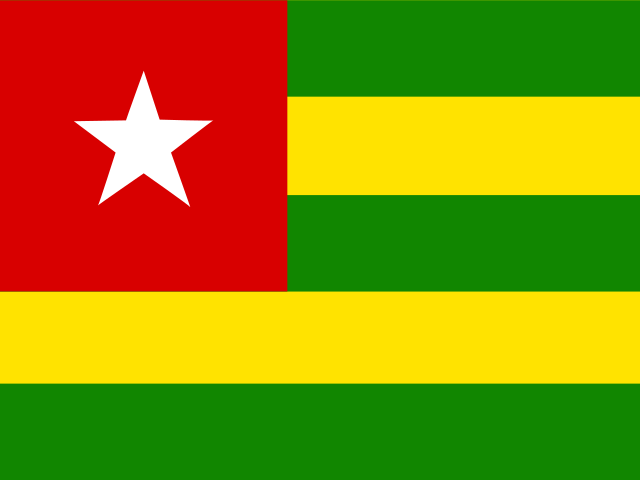
 Western Africa
Togo is a narrow country in West Africa, between Ghana and Benin. Its capital is Lomé. Visitors come for its people, spiritual traditions, markets and landscapes.
Why go
Explore Lomé’s general markets and markets linked to voodoo traditions.
Visit Togoville for voodoo shrines and historic sights.
Walk through the cooler coffee-growing region around Kpalimé.
See the mud-and-straw tower houses of Koutammakou, north of Kara.
Getting there
By air
- Several airlines fly regularly to Lomé airport, whose airport code is LFW.
- Ethiopian Airlines and Royal Air Maroc offer return flights from Europe to Lomé.
- You can also fly to Accra in Ghana and take an air-conditioned bus to Aflao. Walk across the border into Lomé, then arrange your own transport.
By land
- Overland buses run from Burkina Faso, Ghana and Benin.
- Shared cars called bush taxis run from Accra or Benin to Lomé for about US$5. They can be crowded, with four passengers in the back and two sharing the front.
- You can pay for a whole bush taxi. Start with the cost of six passengers, then bargain.
Getting around
Motorcycle taxi
A motorcycle taxi, locally called a taxi-moto, costs about CFA 150–500. Drivers may honk or hiss as they pass to offer a ride. Agree on the fare before getting on. The agreed price includes the tip.
Car taxi
A short one-way city trip usually costs about CFA 500. Trips to northern parts of the city can cost up to CFA 2,500. Taxis have yellow licence plates and their registration number painted on the car. Agree on the fare before getting in. The agreed price includes the tip. On a side street, a security guard may help you stop a taxi. A tip of CFA 300–600 is expected for this help. Use a car taxi when travelling at night. If staying longer, get the phone numbers of several trusted drivers.
Bush taxi
These shared cars connect Lomé with rural areas. They can carry four passengers in the back and two sharing the front. For more space, bargain to hire the whole car, starting with the price of six passengers.
Train
There is no train service in Togo.
What to see and do
Lomé’s markets
The general markets and voodoo markets are among the country’s most popular visitor stops.
Togoville
This town on Lake Togo has voodoo shrines and historic sights.
Kpalimé region
This coffee-growing area offers cooler weather, pleasant views and good walks.
Koutammakou and Tamberma Valley
North of Kara, the Batammariba people build and live in distinctive mud-and-straw tower houses. Reaching this World Heritage site takes a longer journey.
Fazao Mafakassa National Park
This park in central-western Togo offers scenery and safari visits, though it receives relatively few visitors.
Kéran National Park
This park in the far north has one of West Africa’s larger elephant populations.
Food and drink
Fufu
White yams are pounded into a dough-like food, usually eaten by hand with sauce. Sauces include smoked fish, spicy tomato and peanut.
Akume
Made from corn flour, akume is usually eaten by hand with different sauces.
Plantains
Plantains are served grilled, cooked, mashed or fried.
Seasonal fruit
Mangoes, papayas and pineapples are widely sold in season. Roadside sellers also offer oranges.
African fan palm fruit
These fruits look like orange coconuts. The ripe fruit has sweet orange fibres with a flavour similar to mango.
Bissap juice
A popular drink that the source describes as fairly safe because it is boiled.
Money
West African CFA franc (currency code XOF), written as CFA.
- The currency is also used in seven other West African countries.
- The fixed exchange rate is €1 = CFA 655.957.
- Imported Western food is available in supermarkets, but can cost more than in Europe.
Tipping: Agreed taxi fares include the tip. If a security guard helps you stop a taxi, a tip of CFA 300–600 is expected.
Typical costs
- One litre of water: about CFA 300.
- A baguette: about CFA 175.
- Half a pound of local coffee: about CFA 1,200.
- A supermarket beer: about CFA 350; a beer at a restaurant serving foreign residents: about CFA 1,000.
- A supermarket Coca-Cola: about CFA 200–400.
- One litre of petrol: about CFA 600.
Language
- French is the national language and is used between different ethnic groups.
- Very little English is spoken outside business offices and major banks in Lomé.
- Ewe is the most widely spoken local language, especially in the south.
- Mina is spoken around Aného.
- Kabiyè is the main language in the north.
Staying safe
- Stay away from public beaches. Tourists have been mugged there during both the day and night.
- Take extra care in Lomé, where crime is a greater concern than in much of the country.
- Use a car taxi at night. Keep the phone numbers of trusted drivers if you plan to stay for a while.
- Traffic is described as the biggest danger to travellers. Overloaded vehicles, fast driving and motorcycles create risks.
Local customs
Do
- Greet everyone when arriving and leaving.
- Handshakes are an important part of greetings.
- Take time to get to know people.
Don't
- Avoid eating or drinking in public during daylight hours in Ramadan, the Muslim month of fasting. This is considered very impolite, even for visitors who are not Muslim.
Staying healthy
- Drink bottled water or sachets labelled “Pure Water”.
- Bissap juice is described as fairly safe because it is boiled. Avoid the lemonade called “citron”.
- Avoid roadside meals where possible.
- Be aware of poor street hygiene in Lomé, where people may relieve themselves outdoors.
Phone and internet
- A Ghana mobile phone SIM card can work if you stay close to the Ghana border.
- Lomé has inexpensive internet cafés that charge by the hour.
- Computers and internet connections in many cafés are very slow.
- Paid Wi-Fi areas charge from CFA 100 for an hour to CFA 2,000–3,000 for a month.
Where to stay
- Auberge London is a small motel in Agoe, in Lomé’s northern suburbs.
Outdoor adventures in Togo
Togo offers forest hikes, waterfalls, wildlife parks and Atlantic beaches. The hills around Kpalimé are known for cooler weather and pleasant views, while northern parks offer wildlife watching.
Kpalimé coffee-region hikes
HikeCentral Togonear Kpalimé
Head to the coffee-growing countryside around Kpalimé for hikes through the hills.
Akloa Falls hike
HikeAkloa/Tomegbénear Badou
40-minute hike to the fallsThe falls are 10 km south of Badou. Follow the well-worn trail through hillside cocoa plantations into the forest, then follow the creek to the waterfall. Local people offer guiding services.
- Permit: A community access fee is required.
- The approach follows narrow hillside paths.
Fazao Mafakassa National Park safari
SafariCentral Togo
Visit on safari in the center-west of Togo, near the border with Ghana.
Kéran National Park wildlife watching
WildlifeNorthern Togo
Head to Kéran National Park in the far north of Togo. Visitor facilities are limited.
Parc Sarakawa guided wildlife tour
SafariNorthern Togonear Kara
Take a guided tour in a pickup vehicle at Parc Sarakawa.
- Cost: CFA 5,000 per person, plus CFA 4,000 for the vehicle.
Kanté to Nadoba cycling route
CyclingKoutammakou, Northern Togonear Kara
Take a rented or shared taxi from Kara to Kanté, then cycle 25 km to Nadoba.
- Traffic is a major danger in Togo.
- The hilly road north of Kara is particularly dangerous.
Aného beaches
BeacheMaritime Togonear Aného
Visit the oceanfront at Aného, a town known for its beaches.
- Avoid public beaches because tourists have been mugged during both day and night.
Marcelo Beach
BeacheMaritime Togonear Lomé
Head a few kilometres east of central Lomé to Marcelo Beach.
- Avoid public beaches because tourists have been mugged during both day and night.
- Take a car taxi when travelling at night.
Royal Beach Lome
BeacheMaritime Togonear Lomé
Visit Royal Beach Lome for its beach and bar setting.
- Avoid public beaches because tourists have been mugged during both day and night.
- Take a car taxi when travelling at night.
Lake East lakeside walk
HikeMaritime Togonear Lomé
Head to Lake East, also called Lac Est, near central Lomé to walk along the lake.
- Take a car taxi when travelling at night.
Lake West lakeside walk
HikeMaritime Togonear Lomé
Head to Lake West near central Lomé to walk along the lake.
- Take a car taxi when travelling at night.
Airports, metros and trains in Togo
Airports with scheduled flights
- LFWLomé–Tokoin International AirportLoméMain international airport
Trains
- Rail network
- 568 km
People and safety in Togo
Religion
No single faith is a majority. Very mixed.
- Christian44%
- Folk religions36%
- Muslim20%
- No religion6%
- Other<1%
LGBT+ travellers
Same-sex relationships are illegal
- The law allows up to 3 years in prison.
- Some laws protect against discrimination.
Check your own government's travel advice before you go, and be careful with public displays of affection and dating apps.
Women travellers
Ranked #143 of 181 countries for women's safety, inclusion and justice.
43% of women say they feel safe walking alone at night where they live.
Who can visit without a visa
Travellers from 23 of 198 countries can visit Togo easily: no visa, a visa at the airport, or a short online form.
- Visa not required16
- Visa on arrival7
- eVisa175
Who can visit easily, by part of the world
For each part of the world: how many countries' travellers can come easily. Easy means no visa, a visa at the airport, or a short online form.
- Africa20 of 53 countries
- Americas2 of 35 countries
- Europe1 of 46 countries
- Asia0 of 50 countries
- Oceania0 of 14 countries
Questions
Can I get by with English?
Very little English is spoken outside business offices and major banks in Lomé. French is the main shared language.
What money does Togo use?
Togo uses the West African CFA franc, written as CFA, with the currency code XOF.
How do I take a taxi?
Agree on the price before getting in or on. Car taxis have yellow licence plates, and the agreed fare includes the tip.
Are public beaches safe?
The source advises staying away from public beaches because tourists have been mugged at any time of day or night.
What water should I drink?
Choose bottled water, such as Volta, or sachets labelled “Pure Water”.
What local food can I try?
Try fufu, made from pounded white yams, or akume, made from corn flour. Both are usually eaten by hand with sauces.
When does it rain in southern Togo?
Southern Togo has two rainy seasons: April to July and October to November.
Can I find internet access in Lomé?
Yes. There are internet cafés and paid Wi-Fi areas, though many café connections are slow.
How should I greet people?
Say hello to everyone when arriving and leaving. Handshakes are important.
What kind of power supply does Togo use?
The electricity supply is 220 volts at 50 hertz, using Europlug sockets.
 Reviewed by @snuck