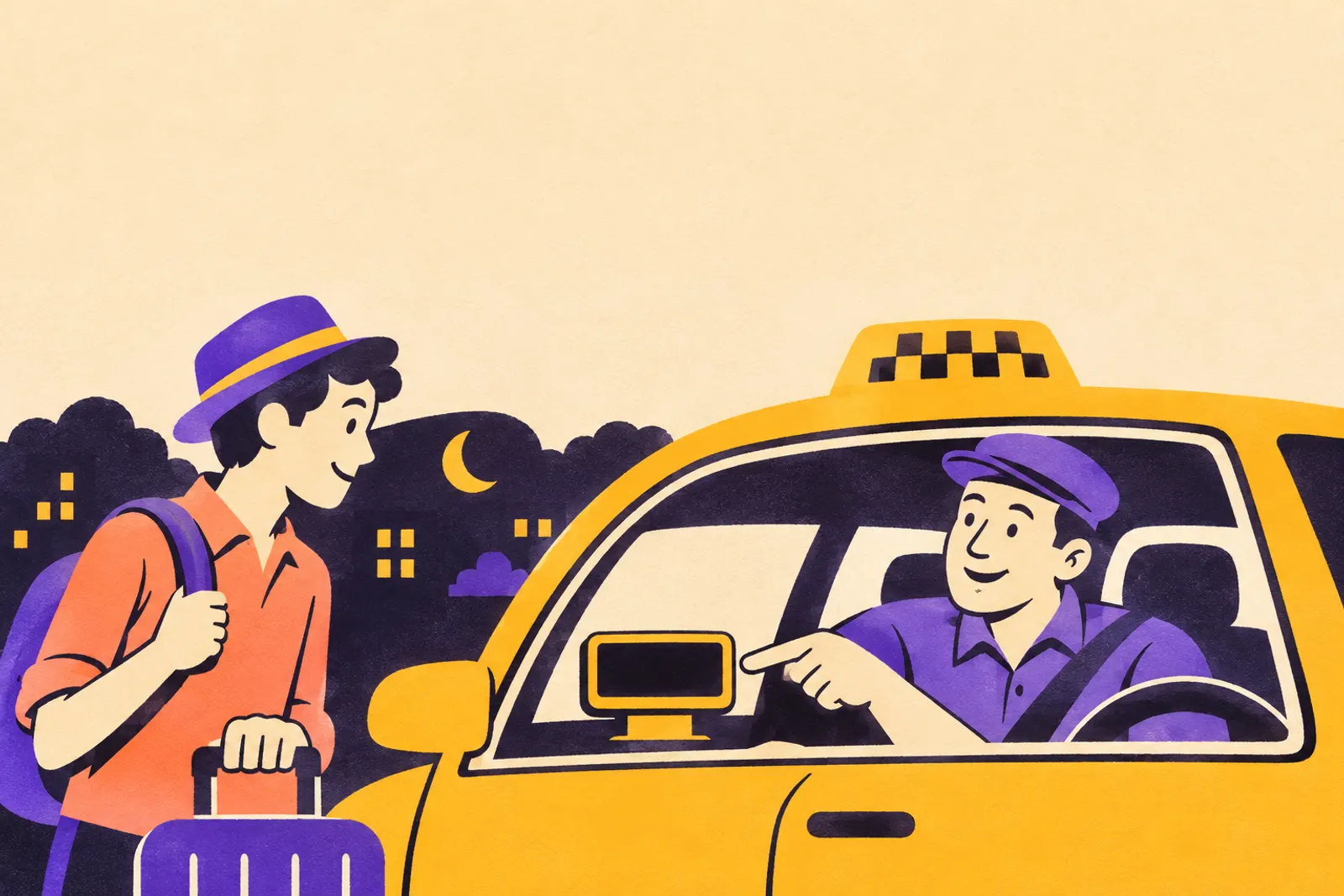
Scam in South KoreaTaxis
Taxi detours to increase the fare in South Korea
How it works
Some drivers take a longer route to run up the fare. A dashboard navigation device does not guarantee a fair route. Road construction or protests can also make a longer route necessary, so a detour alone is not proof of a scam.
Warning signs
- The route heads away from the general direction of your destination.
- The driver takes an unexpected detour without a clear explanation.
How to avoid it
- Check the general route before getting in.
- Use Naver Map or KakaoMap to help follow your journey.
- Have your destination written in Korean.
- Use the free interpretation service shown on the back-seat window sticker if you need help.
If it happens to you
Ask about the route calmly. If you still suspect overcharging, keep your receipt, photograph the driver's ID above the glove box if safe, and report the details to the company.
- Move to a safe place. Avoid arguments or physical confrontation. If you are threatened or cannot leave, call police on 112.
- Write down what happened while you remember it. Save receipts, messages, payment records and any booking details.
- Record useful details safely, such as the vehicle number or business name. For a suspected taxi rip-off in Seoul, photograph the driver's ID above the glove box if safe.
- If a card or phone is missing, contact your card issuer and secure affected accounts. Ask about disputing any payment you did not authorise.
- Report the incident to police. Ask for an interpreter if needed and keep any report reference. Report a taxi complaint to the taxi company too.
- Contact your insurer if you may claim for a loss. If your passport is missing, contact your embassy or consulate for replacement advice.
What travellers report
Posts about this scam on other sites, summarised in our words. Open one to read the original.
- Redditr/koreatravel2026Got scammed day 1A visitor reports a second taxi incident in which an illegal U-turn added ten minutes to the journey and the driver charged above the meter.Read on Reddit
- Redditr/koreatravel2024Led into a scam by Kakao Taxi driverA commenter recounts a driver taking a long expressway route through heavy traffic that raised an expected 9,000-won journey to 20,000 won before being challenged.Read on Reddit
- Government advice인천광역시 분야별 교통·도로 사이트Incheon's taxi complaint guidance identifies charging after an unauthorized long detour or disregarding a passenger's requested route as unfair fare practices.Read on Government advice
Questions
What is the taxi detours to increase the fare scam in South Korea?
Some drivers take a longer route to run up the fare. A dashboard navigation device does not guarantee a fair route. Road construction or protests can also make a longer route necessary, so a detour alone is not proof of a scam.
How can I spot it early?
The route heads away from the general direction of your destination. The driver takes an unexpected detour without a clear explanation.
How do I avoid taxi detours to increase the fare in South Korea?
Check the general route before getting in. Use Naver Map or KakaoMap to help follow your journey. Have your destination written in Korean. Use the free interpretation service shown on the back-seat window sticker if you need help.
What should I do if it happens to me?
Ask about the route calmly. If you still suspect overcharging, keep your receipt, photograph the driver's ID above the glove box if safe, and report the details to the company.
Where in South Korea does this happen?
Taxi rides in Seoul It has been reported in Seoul.
How common is this scam in South Korea?
Occasional. South Korea is generally very safe, and tourist scams are occasional rather than widespread. Watch for taxi overcharging, unlicensed taxis, fake monks asking for money, and friendly invitations to ceremonies that end with a payment demand. Pickpocketing is not very common in Seoul, but keep your belongings secure.
Are there similar scams in South Korea?
Yes: unlicensed taxis, inflated taxi fares and refusal to use the meter, being steered towards a more expensive taxi.
Who can I report it to?
Police: call 112 for a police emergency. For non-emergency police enquiries, call 110. You can also visit a district police station. Police have interpreters on call. Taxi company: report the journey details, receipt and vehicle information. For a suspected rip-off in Seoul, include a photograph of the driver's ID above the glove box if you obtained one safely. Card issuer or bank: use your banking app or a trusted contact number to freeze a missing card, report unfamiliar payments and ask about a dispute. Embassy or consulate: contact your country's embassy or consulate if your passport is lost or stolen. Use its official contact details. Travel insurer: contact your insurer through your policy's claims channel. Keep police report details, receipts and evidence of the loss.
What number do I call in an emergency in South Korea?
Police emergency: 112, Non-emergency police enquiries: 110, Fire and ambulance: 119.
 Reviewed by @snuck