
Eastern Europe
 Eastern Europe
BelarusTravel guide
- Minsk
- Brest
- Polotsk
- Gomel
- Pinsk
- Grodno
Belarus has historic castles, forests and Soviet-era buildings. Its capital is Minsk. The country has strict authoritarian rule, extensive surveillance and arbitrary law enforcement. Some governments advise against all travel, and borders or travel rules may change suddenly.
Why go
Explore Minsk's museums, squares and Soviet-era architecture.
See the medieval castles at Mir and Nesvizh.
Visit Brest Fortress, a major Second World War memorial.
Discover forests, European bison and lakes.
Getting there
By air
- Minsk National Airport is about 40 km from Minsk.
- The source lists flight routes through the Middle East, Turkey and Russia. It says flights through the European Union or from the United Kingdom are no longer possible.
- A connection through Russia requires passing through Russian customs and transferring to a domestic terminal. The source says a Russian transit visa is required.
By land
- Most crossings with Poland, Lithuania and Latvia have closed. This makes flying the most practical option for travellers who are not Russian citizens.
- The source gives conflicting information about land travel from Russia: one section bars it for foreign visitors, while another allows six selected crossings. Check which crossings your service can use before travelling.
- The source lists direct buses from Tallinn to Minsk and services from Baltic countries. It gives journey times of about four hours from Vilnius and 5.5 hours from Kaunas.
By sea
- The source describes river cruises, including routes between Polotsk and Daugavpilis in Latvia.
- It also describes cruises from Grodno along the Neman River towards Poland's Augustow channel.
Customs
- Use the green lane if you have nothing to declare and the red lane if you have goods to declare. Random checks can happen in the green lane.
- Declare expensive goods. The source allows small quantities of alcohol, cigarettes and computer equipment for personal use, but gives no exact limits.
- Customs forms ask about publications you carry. Political material may lead to detention or deportation.
Getting around
Train
Trains reach many destinations and are relatively cheap and fast. Tickets are usually available up to 60 days ahead through the Belarusian railway website. If your ticket includes electronic registration, print it and board directly. Otherwise, exchange it at a station counter first.
Inter-city bus
Buses are cheap, fairly comfortable and usually punctual. They may cost more and be less comfortable than trains. Buy tickets at bus stations in advance because some services sell out.
Car
Drive on the right. Watch for pedestrians and slow-moving traffic, especially people without reflectors. Main roads and roads around Minsk are generally in fairly good condition. Prepare for winter conditions and heavy fog. Major motorways charge tolls through the BelToll system. There are no toll booths, so check the roads and payment arrangements before driving. Car hire is available at Minsk airport and in the city from international and local companies. If you have an accident, wait for the police. Officials may speak only Russian, and resolving an accident can take weeks.
Maps and local transport information
Yandex Maps has English-language maps for finding addresses and planning routes. 2GIS is another map option. Local public transport timetables are available on BTrans.
What to see and do
Minsk
See Soviet-era architecture, Independence Square, the Belarus State Museum and the Zaslavsky Jewish Monument.
Brest Fortress
This 19th-century fortress was the site of a major Second World War battle and commemorates Soviet resistance.
Mir Castle Complex
This late medieval castle is a World Heritage Site and one of the country's main historic sights.
Nesvizh Castle
This World Heritage Site is among the country's finest castles.
Dudutki Open Air Museum
Traditional wooden buildings show 19th-century life through crafts such as pottery, carpentry and baking.
Belovezhskaya Pushcha National Park
This ancient forest is part of a World Heritage Site shared with Poland. It is home to European bison and other wildlife, and has a small museum.
Food and drink
Draniki
Thick pancakes made from shredded potatoes, traditionally eaten with sour cream.
Pyachysta
A traditional holiday dish of boiled, stewed or roasted suckling pig, poultry, pork or beef.
Zacirka
Small pieces of dough boiled in water, then served with milk or salted pork fat.
Potato dishes
Potatoes appear in salads, patties and baked puddings, often with mushrooms or meat. Some cafes specialise in potato dishes.
River fish
Baked or boiled river fish is usually prepared with little seasoning.
Mushrooms and berries
Local food includes fresh, dried, salted and pickled mushrooms, along with berries such as bilberries, raspberries and cranberries.
Money
Belarusian ruble (BYN)
- The source gives conflicting reports about foreign cards: one section says they do not work, while another reports successful use in 2025. Bring physical cash to cover your needs.
- US dollars and euros can be exchanged at Minsk airport, main railway stations and exchange kiosks in large city centres.
- Compare the rates for buying and selling currency. The difference affects how much money you receive.
- Bring clean, undamaged banknotes. Exchange kiosks may reject marked or damaged notes or charge an extra fee.
Tipping: Tips are usually not expected. In restaurants, especially more expensive ones, add around 10% if the bill has no service charge.
Typical costs
- Food in supermarkets and services generally cost less than in Western Europe.
- The source lists petrol at BYN 2.46 per litre in January 2023; this is a dated price.
- The source lists an in-person registration fee of BYN 27 from January 2020; this is a dated fee.
Language
- Belarusian and Russian are the official languages. Russian is more widely spoken.
- Very little English is spoken, even in Minsk. A good knowledge of Russian or Belarusian is needed.
- Polish is spoken in western areas, especially around Grodno. Some people know a few German words.
- Road signs may use Belarusian or Russian. A place may have different English spellings, such as Grodno and Hrodna for the same town.
Staying safe
- Some governments advise against all travel because of the Russian invasion of Ukraine, arbitrary law enforcement and possible civil unrest.
- Be prepared for sudden border or travel restrictions.
- Street crime is rare, but remain aware of your surroundings.
- Expect possible surveillance of hotel rooms and communications. Personal belongings in hotel rooms may be searched.
Local customs
Do
- Recognise Belarusians as a distinct people. Belarusian is a separate language from Russian.
- Speak calmly in public and allow people time to become familiar with you.
- Treat discussion of the Second World War with great respect because of the country's heavy losses.
- Understand that traditional courtesy may include men opening doors, carrying items or paying restaurant bills.
Don't
- Avoid harsh remarks about the political situation or Lukashenko. Many people feel uncomfortable discussing these subjects.
- Do not assume a reserved manner or a short answer means hostility.
- Do not assume a stranger will welcome a smile. It can be seen as insincere or mocking.
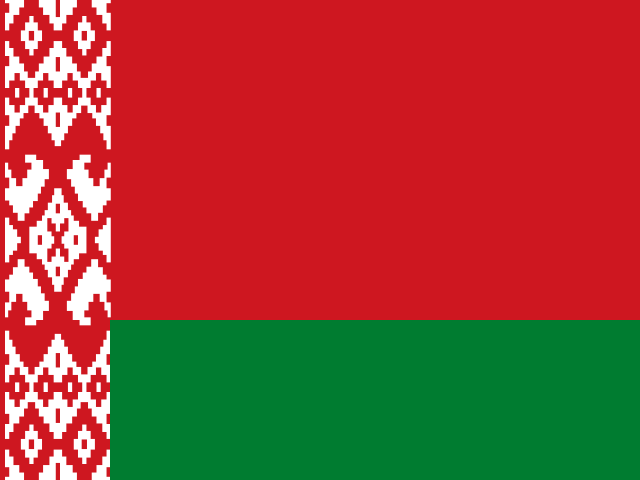
- Be cautious about displaying Belarusian flags. The official flag and the old national flag carry different, sensitive political meanings.
Staying healthy
- Drink bottled water. Tap water is not safe to drink.
- Medical care is generally poor, and getting treatment can be difficult without Russian or Belarusian.
- Check that your travel health insurance is valid in Belarus.
- Ambulances may be poorly equipped and unreliable. Waiting 30 minutes or longer is not unusual.
Phone and internet
- Three major mobile providers sell prepaid SIM cards for calls and internet access: MTS, A1 and Life:).
- The source rates MTS as having the best coverage, followed by A1, then Life:).
- Show your passport when buying a SIM card. All three providers offer tourist plans with extra data available to buy.
- Free Wi-Fi requires you to enter a mobile phone number and receive a validation code by text message.
Where to stay
- Hotels arrange mandatory registration for their guests automatically.
- If you move from a hotel into a private apartment, you need to arrange registration with the local migration office.
- Do not leave computers, phones, wallets or cash in hotel rooms. The source reports thefts by housekeepers.
- Hotel rooms and phones may be monitored, and personal belongings may be searched.
Outdoor adventures in Belarus
Belarus offers ancient forest, lakes and wildlife, including European bison in Belovezhskaya Pushcha National Park. Pripyat Reserve and the Braslau Lakes offer other nature visits, while the relatively flat countryside around Grodno suits cycling.
Belovezhskaya Pushcha National Park
WildlifeBorder with Poland
Visit the Belarusian part of Białowieża Forest. Transport, guides and booking arrangements are not specified.
Braslau Lakes nature visit
More to do
Visit the Braslau Lakes for a nature experience. Transport, routes and guided trips are not specified.
Pripyat Reserve nature visit
More to do
Visit Pripyat Reserve for a nature experience. Access arrangements and guided trips are not specified.
Cycling around Grodno
CyclingCountryside around Grodnonear Grodno
Plan a ride through the countryside around Grodno. Use an app based on OpenStreetMap, such as mapy.cz, for route coverage.
Airports, metros and trains in Belarus
Airports with scheduled flights
- BQTBrest International AirportBrestMain international airport
- MSQMinsk National AirportMinskMain international airport
Metro and subway
- MinskMinsk Metro33 stations44.9 kmsince 1984
Trains
- Rail network
- 5,459 km
- Electrified
- 874 km
People and safety in Belarus
Religion
Most people are Christian. Mixed.
- Christian71%
- No religion29%
LGBT+ travellers
Legal in law, risky in places
- Same-sex marriage is not recognised.
Check your own government's travel advice before you go, and be careful with public displays of affection and dating apps.
Women travellers
Ranked #63 of 181 countries for women's safety, inclusion and justice.
56% of women say they feel safe walking alone at night where they live.
Who can visit without a visa
Travellers from 96 of 198 countries can visit Belarus easily: no visa, a visa at the airport, or a short online form.
- Visa not required94
- Freedom of movement1
- Visa on arrival1
- eVisa2
- Visa required100
Who can visit easily, by part of the world
For each part of the world: how many countries' travellers can come easily. Easy means no visa, a visa at the airport, or a short online form.
- Europe43 of 45 countries
- Americas20 of 35 countries
- Asia27 of 50 countries
- Oceania4 of 14 countries
- Africa2 of 54 countries
Questions
Is Belarus safe for a first visit?
Street crime is rare, but arbitrary law enforcement, surveillance and sudden travel restrictions are serious concerns. Some governments advise against all travel.
Can I rely on English?
Very little English is spoken, even in Minsk. A good knowledge of Russian or Belarusian is needed.
Should I bring cash?
Yes. The source gives conflicting reports about foreign card use, so bring enough physical cash for your needs; US dollars and euros can be exchanged locally.
Can I buy transport tickets in person?
Bus tickets can be bought at bus stations. Train tickets without electronic registration must be exchanged at a station counter before boarding.
Can I drink tap water?
No. Buy bottled water.
What local food should I try?
Try draniki, thick shredded-potato pancakes served with sour cream. Other traditional dishes include pyachysta and zacirka.
Do I need to tip?
Tips are usually not expected. In restaurants, add around 10% if there is no service charge.
How do I get mobile internet?
Buy a prepaid SIM card from MTS, A1 or Life:). You must show your passport.
What electricity supply does Belarus use?
The electricity supply is 220 volts at 50 hertz. Europlug and Schuko plugs are used.
Which sights are the main highlights?
Highlights include Minsk, Brest Fortress, Mir and Nesvizh castles, and Belovezhskaya Pushcha National Park.
 Reviewed by @snuck