
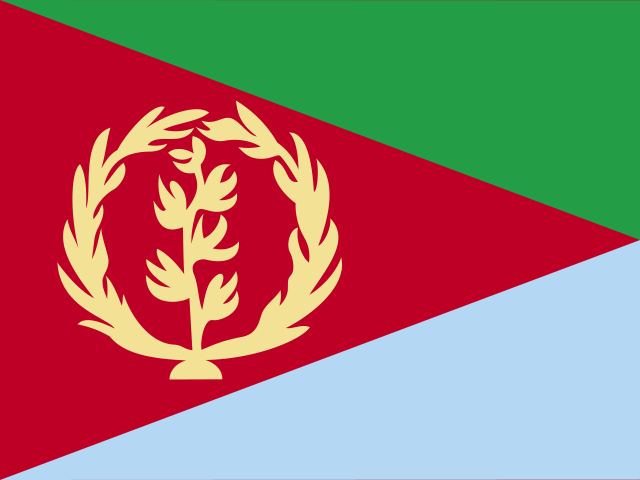
 Eastern Africa
Eritrea is a country in East Africa with its capital in Asmara. Its attractions include striking architecture, dramatic scenery and welcoming people, but travel is tightly controlled.
Why go
Asmara has Italian-era churches, a theatre and unusual buildings.
Massawa offers Red Sea food and coastal scenery.
The central highlands are cooler and wetter than the hot, dry Red Sea coast.
Rainfall is heaviest from June to September, except in the coastal desert.
Getting there
By air
- Asmara International Airport is the country's only active international airport.
- The source lists flights from Cairo, Addis Ababa, Dubai, Istanbul and Khartoum.
- The source reports that Yemenia suspended its flights and that Eritrean Airlines appeared to have stopped flying by mid-2023.
By land
- You can drive from Sudan through the Kassala border crossing with proof that you own the vehicle, the required travel documents and a customs declaration if needed. Rental vehicles are not allowed.
- Border roads are very poor, so use a vehicle with four-wheel drive. The first fuel station is about 40 km inside Eritrea, in Tesseney.
- Pickup taxis run daily from Kassala to the border, with Eritrean taxis continuing to Tesseney.
By sea
- Eritrea has ports at Massawa and Assab.
- Shipping services between Massawa and Jeddah mainly carry Muslim pilgrims. Entry to or transit through Saudi Arabia can be difficult for other travellers.
Customs
- You may not take more than 1,000 nakfa out of Eritrea.
- Do not buy leopard skin, zebra skin or ivory to take home. These items cannot leave Eritrea, and their international trade is banned.
- Driving into Eritrea may require a customs declaration.
Getting around
Travel permits
You need a government travel permit to leave Asmara. Apply several days before you plan to travel. Processing can take 24 hours or longer. The source names the Ministry of Tourism office on Harnet Avenue and the Tourist Bureau on Liberation Avenue in Asmara as permit offices. If you arrive by land or sea, you can seek a transit travel permit where you enter. Discuss your entry point and travel plans with the Eritrean diplomatic mission beforehand. Access to places outside Asmara depends on government decisions and road conditions.
Bus and minibus
Buses and minibuses are the main way to travel between towns. Several services a day connect Asmara with Keren, Massawa and towns in the southern highlands. Services to Nakfa and Assab are much less frequent. Usually, you buy your ticket on the bus, and places are first come, first served. Some state-run routes allow advance tickets at Asmara bus station. You can also ask there about schedules.
Car
Drive on the right. Main roads from Asmara to Massawa, Mendefera, Dekemhare, Barentu and Keren are paved and in relatively good condition. Other roads may be very poor, especially during the rainy season. Unpaved roads may contain mines, so check with local authorities before travelling. Avoid driving after dark. Diesel is not officially sold to private car owners.
Train
The Asmara–Massawa railway carries chartered tourist groups on a historic steam train. There is no regular passenger service. A one-way journey takes about five hours.
What to see and do
Church of Our Lady of the Rosary
This Italian-era church has a tall bell tower and Lombard-Romanesque architecture. Its tower is a useful landmark in Asmara.
Enda Mariam Orthodox Cathedral
This ancient church stands in central Asmara. Its layout represents the four directions of the earth.
Asmara Theatre and Opera House
Built in 1920, it is a striking example of Italian architecture.
Al Khulafa Al Rashidin Mosque
Its design combines Italian and local Moorish styles.
Fiat Tagliero
This former service station looks like an aeroplane. Its two projecting wings each measure 21 metres.
Explore Asmara's architecture
The city has churches, a mosque, a theatre and an unusual aeroplane-shaped service station.
Food and drink
Injera and stews
Injera is a soft, spongy flatbread made from fermented grains. Meat and vegetable stews are served on top and eaten by hand.
Shahan-ful
This bean stew is served with pita bread. It is common for breakfast or brunch in simple places.
Spicy grilled fish
Simple restaurants in Massawa's old town serve fish typical of the Red Sea area.
Khobzen
This is pita bread soaked in goat butter and honey, served in Massawa.
Italian food
Pasta, lasagna, steak and grilled fish are widely available because of Eritrea's Italian colonial history.
Other cuisines in Asmara
The capital has Chinese restaurants, a Sudanese restaurant and an Indian restaurant called Rooftop.
Money
Eritrean nakfa (ERN), written as Nkf or ናቕፋ.
- Nakfa cannot be bought outside Eritrea and is tied to the US dollar.
- Do not accept banknotes issued before 1 January 2016. They are no longer valid.
- The source reports a November 2025 plan to replace all banknotes at equal value. Find out the status before getting a large amount of cash.
- Avoid offers of better unofficial exchange rates or other questionable money deals. These can lead to severe legal trouble.
Typical costs
- The source estimates less than US$50 a day for local food, budget lodging and public transport.
- Bottled mineral water costs around 20–30 nakfa.
- The source lists cheap pensions in Asmara from 100 nakfa and modest hotels around 200 nakfa.
- The source lists the Intercontinental Hotel in Asmara at a little over US$150 a night.
- Imported goods, fuel, private transport, higher-end hotels and government fees can be expensive.
Language
- Tigrinya is the main shared language across Eritrea.
- Arabic and English are also main languages. English can help travellers communicate.
- Italian is spoken by relatively few people, mainly older residents, members of the Italian community and some urban businesspeople.
Staying safe
- Avoid criticism or disrespect towards the government, the ruling party or the country. People accused of crimes may face indefinite detention.
- Avoid border areas and the towns of Teseney, Barentu and Assab. The source reports risks of armed robbery, bomb attacks and sudden violence.
- Foreign visitors cannot travel beyond Senafe or Adi Quala towards the Ethiopian border. The area is heavily militarised.
- Watch carefully for bicycles, vehicles and people crossing roads. Bicycle accidents are common.
Local customs
Do
- Ask permission before photographing people or their property.
- Use your right hand to greet, eat or pass something to another person. Using both hands to hand something over is also respectful.
- Dress modestly. Low necklines, short skirts and shorts can attract unwanted attention.
- Keep conversations polite and choose neutral topics.
- Learning a few words of Tigrinya can help you connect with local people.
Don't
- Do not show contempt or harsh criticism towards local culture, religion or politics.
- Avoid public displays of affection, which are considered immodest.
- Do not use your left hand alone to greet, eat or hand over an item.
- Smoking by women is frowned upon, especially when the woman is perceived as Eritrean.
Staying healthy
- Do not drink tap water. Check that bottled water has a sealed cap.
- Choose cooked food and bottled drinks. Avoid uncooked food, salads and ice cream.
- The source identifies a Jordanian hospital run by the United Nations that treats foreigners. It says local hospitals have inadequate facilities.
- Textiles, fur-covered animal skins and mats may carry parasites. Make sure purchases are washed, treated and dried before taking them home.
Phone and internet
- Internet access is heavily censored.
- The source suggests the free Tor software to get around censorship, but warns that it may become less effective.
Where to stay
- Asmara has accommodation ranging from cheap pensions to the Intercontinental Hotel. Some hotels charge foreigners different rates from local guests.
- Basic lodging may have shared bathrooms, no air conditioning and no room service.
- At basic hotels, cleaning and fresh sheets may need to be requested and may cost extra.
- Mid-range hotels generally offer private bathrooms, televisions and air conditioning. Laundry and room service are usually not included.
Outdoor adventures in Eritrea
Eritrea has Red Sea diving, mountain scenery and outdoor activities around Asmara. You can hike, climb and ride a mountain bike in the highlands, but equipment is limited. Land mines are a hazard around Nakfa, and travel near the borders is dangerous.
Dahlak Marine National Park diving
Scuba divingCoastal Eritrea
Dive in the Dahlak islands. No departure point or operator details are given.
Debre Bizen hilltop hike
Hike
Men can hike to the hilltop monastery for views and a visit to its old library. Women are not allowed.
Martyrs National Park
HikeCentral highlandsnear Asmara
Take red city bus No. 28 from the square outside Enda Maryam Cathedral to Tselot, about 7 km southeast of central Asmara. The park is within walking distance of the village. Consult locals and bring a guide.
- Only a couple of buses run each day. Leave early and arrange a way back.
- Allow a couple of days in Asmara to get used to the thinner air at 2,300 m if you are not used to high places.
Asmara outskirts and eastern escarpment hiking
HikeCentral highlandsnear Asmara
Consult locals and bring a guide to explore the highland areas outside Asmara. For the Massawa Road area around Bar Durfo, take a car or taxi beyond Biet Ghiorghis, the last stop of bus No. 1.
- Allow a couple of days to get used to Asmara's thinner air at 2,300 m.
- Bring sunscreen, UV-blocking sunglasses and warm clothing.
Rock climbing outside Asmara
ClimbingCentral highlandsnear Asmara
Consult locals and bring a guide to the highland areas outside Asmara. Bring your own climbing equipment.
- Climbing shoes, ropes and other safety equipment are in very limited supply locally.
- Bring a guide who knows the area and speaks the local language.
Mountain biking outside Asmara
CyclingCentral highlandsnear Asmara
Bring your own mountain bike and equipment. Consult locals and bring a guide to explore the areas outside Asmara.
- Bicycle accidents are common. Watch for vehicles, other riders and pedestrians.
- Bring a guide who knows the area and speaks the local language.
Nakfa hill walks
HikeSahel mountainsnear Nakfa
Explore the small hills around Nakfa, keeping strictly to well-used paths.
- Land mines are a real hazard. Stay on well-used paths.
Airports, metros and trains in Eritrea
Airports with scheduled flights
- ASMAsmara International AirportAsmara
Trains
- Rail network
- 306 km
People and safety in Eritrea
Religion
Most people are Christian. Mixed.
- Christian50%
- Muslim48%
LGBT+ travellers
Same-sex relationships are illegal
- The law allows up to 7 years in prison.
Check your own government's travel advice before you go, and be careful with public displays of affection and dating apps.
Who can visit without a visa
Travellers from 4 of 198 countries can visit Eritrea easily: no visa, a visa at the airport, or a short online form.
- Visa not required2
- Visa on arrival2
- Visa required194
Who can visit easily, by part of the world
For each part of the world: how many countries' travellers can come easily. Easy means no visa, a visa at the airport, or a short online form.
- Africa4 of 53 countries
- Asia0 of 50 countries
- Europe0 of 46 countries
- Americas0 of 35 countries
- Oceania0 of 14 countries
Questions
Can I travel freely outside Asmara?
No. You need a government travel permit, and you should apply several days ahead because processing can take 24 hours or longer.
How do I travel between towns?
Buses and minibuses are the main options. Tickets are usually bought on board, with places given on a first-come, first-served basis.
What money should I use?
The local currency is the Eritrean nakfa. You cannot buy it outside Eritrea, and you may not take more than 1,000 nakfa out of the country.
Will I be able to speak English?
English is one of the country's main languages and can help you get around. Tigrinya is the most widely shared language, and a few phrases are appreciated.
Is the tap water safe to drink?
The source advises foreign visitors not to drink tap water. Choose bottled water and check that the cap is sealed.
What is typical Eritrean food?
In the highlands, injera flatbread is served with spicy meat and vegetable stews. Italian food is also common, while Massawa has Red Sea fish dishes.
What should I expect from a budget hotel?
Basic hotels may have shared bathrooms and no air conditioning. Cleaning or fresh sheets may need to be requested and may cost extra.
Can I take photographs?
Ask before photographing people or their property. Seek official permission for government, police and military buildings, as photography can lead to arrest and questioning.
Which areas should I avoid?
The source warns against border areas and the towns of Teseney, Barentu and Assab because of robbery, bomb attacks and possible violence.
What clothes should I pack?
Modest Western clothing is generally accepted, and women do not have to wear veils. Revealing clothes can attract unwanted attention and be poorly received.
 Reviewed by @snuck